


Intensity and short bursts of motivation often grab the headlines in athletic development, but true success in training, rehabilitation, and nutrition relies on a far more sustainable principle. The ultimate common thread among both elite athletes and everyday fitness enthusiasts who achieve long-term success is not absolute perfection. Instead, it is their ability to execute the right movements and habits repeatedly over an extended timeline. Understanding the role of consistency in sports training allows individuals to unlock genuine biological progress through purposeful, calculated adaptation.
Physiological Adaptations Require Repetitive Stress

The human body is an incredibly adaptive organism, but it only changes its structural composition when subjected to repeated exposure to physical stress. Performing one exceptionally high-quality training session will not significantly improve your maximal strength, top-end speed, or cardiovascular endurance. True physiological adaptation occurs when a structured training stimulus is applied consistently across weeks, months, and years.
From a sports science perspective, athletic development relies on highly specific timelines:
- Strength gains depend directly on progressive overload and neural adaptation.
- Speed development requires regular, repeated neuromuscular patterning to optimize stride efficiency.
- Injury resilience is built gradually through systematic, progressive tissue loading over time.
Missing an isolated workout will never derail your athletic journey, but chronic inconsistency over several training blocks completely stalls development. According to foundational guidelines from the National Strength and Conditioning Association (NSCA), the primary target of an athletic program should be long-term adherence rather than short-term perfection.
Nutritional Patterns Over Isolated Dietary Choices
Fueling your body for high performance operates on the exact same biological timeline as your physical training. Eating a single healthy, balanced meal does not instantly improve your overall body composition or optimize your metabolic health. Conversely, indulging in an occasional poor meal does not destroy your hard-earned progress. What truly dictates your performance capacity is your systemic dietary pattern.
Establishing habitual dietary practices builds an internal environment optimized for tissue repair and energetic efficiency. Consistently meeting your target protein intake supports muscle synthesis, while balanced macronutrients provide the necessary substrates for glycogen replenishment and recovery. Furthermore, maintaining proper hydration ensures optimal cellular function and joint lubrication during heavy training blocks. When you eat well most of the time, minor deviations become completely irrelevant to your long-term progress. For athletes seeking to establish these structural baselines, exploring our comprehensive EvoFitLab services can help align daily nutritional habits with sport-specific performance goals.
Sleep and Recovery: Prioritizing the Bigger Picture
Recovery parameters, particularly sleep quality, are frequently misunderstood by competitive athletes. Many individuals experience acute psychological anxiety about achieving perfect sleep right before a major tournament or competition. Ironically, this self-imposed pressure often causes heightened autonomic arousal, leading to a worse night of rest.
In sports medicine, we look at cumulative data rather than single events. Guidelines from the American College of Sports Medicine (ACSM) emphasize that an isolated night of poor sleep has a negligible impact on physical performance if your baseline sleep architecture is historically strong. Real-world examples demonstrate that elite athletes can still perform exceptionally well despite suboptimal sleep immediately prior to a competition. However, chronic sleep deprivation is a completely different issue, significantly impairing cognitive function, reaction time, tissue recovery, and immune defense. The human body remains highly resilient under pressure, provided it is supported by consistent habits over an extended duration.
Behavioral Psychology and Adherence Strategies
From a behavioral standpoint, emphasizing consistency reduces performance anxiety and directly improves long-term program adherence. When athletes focus obsessively on perfection, they become hyper-focused on minor deviations. This rigid mindset makes them far more likely to completely abandon their athletic or rehab programs after experiencing normal setbacks.
Conversely, when you actively choose to focus on consistency in sports training, you learn to accept natural performance fluctuations as standard components of development. This healthy perspective shift is vital for maintaining a long-term commitment to your physical health, sport performance, and injury rehabilitation. You can discover more strategies on cultivating an athletic mindset by exploring our dedicated EvoFitLab blog resources.
To build an unbreakable routine, incorporate these practical execution steps into your schedule:
- Set realistic, repeatable habits to avoid extreme, unsustainable plans that lead to burnout.
- Focus your attention on weekly training patterns and macro trends rather than daily perfection.
- Accept inherent lifestyle variability, recognizing that sub-optimal workouts, poor meals, and rough nights are inevitable.
- Prioritize long-term adherence over short-term intensity to ensure predictable, progressive results.
Conclusion
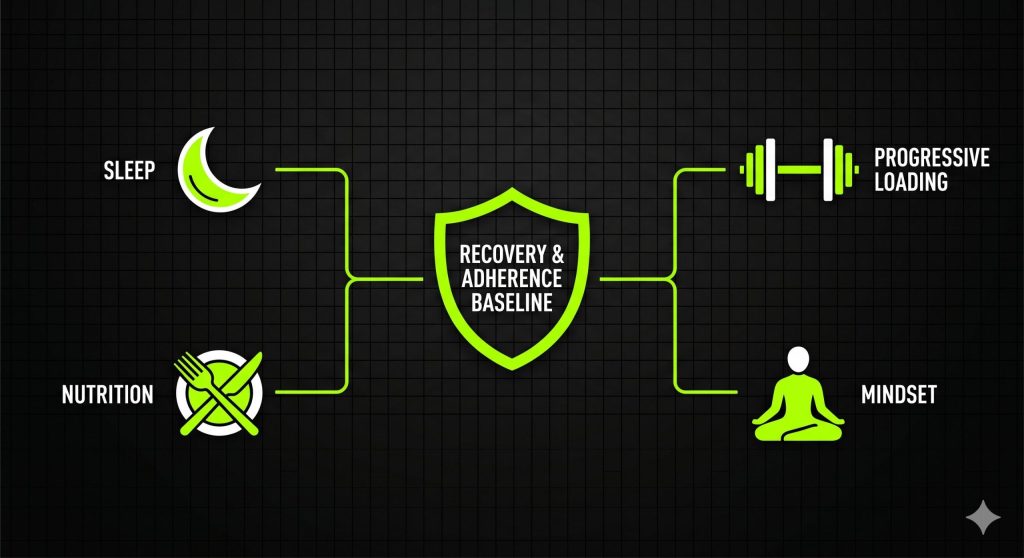
If your physical and mental foundation is built on regular habits, a bad day will never break your long-term progress. But if your foundation is inherently weak, a single good day cannot save your performance capacity. Ultimate adherence is the element that transforms raw physical effort into lasting results across performance, sports rehabilitation, and overall health.
Are you ready to stop relying on temporary motivation and start building an elite athletic foundation? Book a consult with Gerard Nicholas and the team at EvoFitLab today.
Written by Gerard Nicholas, CSCS