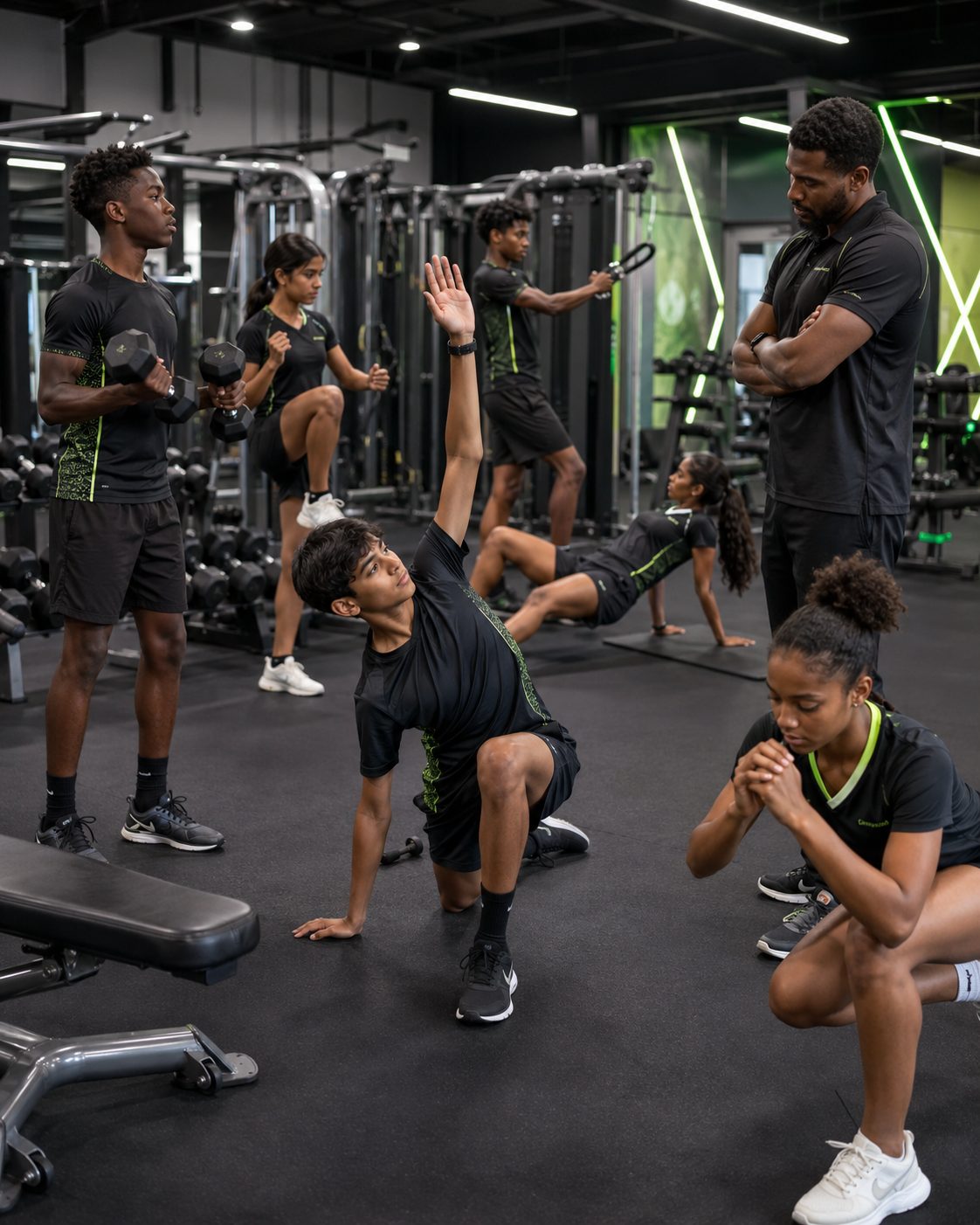


A successful cricket season does not begin during the final two weeks of pre-season. It begins with a structured off-season plan that gives players time to recover, restore movement, rebuild fitness, develop strength, improve speed, and prepare for the demands of competition.
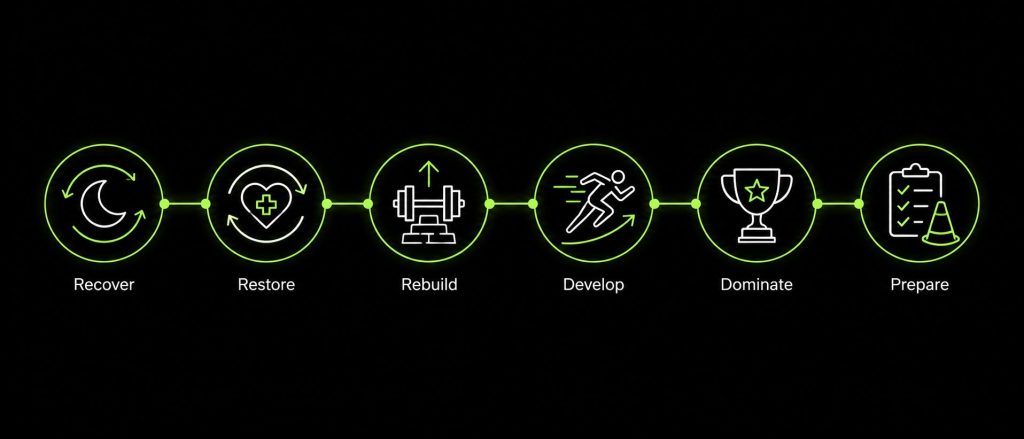
The EvoFitLab Cricket Off-Season Training Program follows six progressive phases:
Recover → Restore → Rebuild → Develop → Dominate → Prepare
The goal is clear: arrive at pre-season stronger, faster, more powerful, more resilient, and less likely to get injured.
This structure supports players across different formats and roles, including batters, fast bowlers, wicketkeepers, and fielders. However, coaches should still adjust training loads according to each player’s position, age, injury history, and match schedule.
For a broader explanation of how structured training phases support athletic development, review EvoFitLab’s Fitness Periodization Guide.
Why Cricket Players Need a Structured Off-Season
Cricket places several physical demands on the body. Players must sprint, throw, rotate, accelerate, decelerate, change direction, and repeat high-intensity efforts throughout training and competition.
Fast bowlers also need to tolerate repeated bowling spells while managing stress on the lower back, shoulders, hamstrings, calves, and hips.
Research comparing cricket training activities with match demands shows why conditioning must reflect the physical requirements of actual competition. General fitness matters, but players must also prepare for the specific running, sprinting, bowling, and recovery demands of the game.
A complete cricket off-season should therefore address:
- Physical recovery
- Movement quality
- Aerobic fitness
- General strength
- Maximum strength
- Speed and acceleration
- Rotational power
- Bowling resilience
- Repeat-sprint ability
- Match-specific conditioning
- Recovery and readiness
The following 12-week system develops these qualities in a logical order.
The 12-Week Cricket Off-Season Training Program
Phase 1: Recover and Reset

Weeks 1 to 2
Objectives:
- Physical recovery
- Mental recovery
- Injury management
- Movement restoration
- Mobility development
- Baseline testing
Training priorities:
- Mobility
- Recovery sessions
- Light aerobic work
- Core stability
- Shoulder health
- Hip mobility
Cricket focus:
- Heal accumulated season stress
- Address minor injuries and persistent discomfort
- Restore movement quality
This phase allows players to recover without becoming completely deconditioned.
Although training intensity drops, movement does not stop. Players should use this period to restore mobility, manage symptoms, and identify physical limitations before heavier training begins.
EvoFitLab’s Four Worlds Movement Framework can help players rebuild foundational movement quality before progressing to more demanding strength and speed work.
Coach’s message:
Recover without becoming deconditioned.
Phase 2: Rebuild the Engine
Weeks 3 to 4
Objectives:
- Aerobic fitness
- Tissue capacity
- Running mechanics
- General strength
- Work capacity
Training priorities:
- Aerobic intervals
- Strength foundation
- Sprint mechanics
- Rotational medicine ball work
- Landing mechanics
Cricket focus:
- Running between wickets
- Repeat fielding efforts
- Match endurance
The second phase rebuilds the player’s general athletic engine.
Aerobic fitness supports recovery between repeated high-intensity efforts. Meanwhile, general strength and landing mechanics prepare the body for heavier loading later in the program.
Players should also begin refining running mechanics. Efficient acceleration and deceleration improve running between wickets and help fielders respond more effectively.
Coach’s message:
Build the engine before chasing horsepower.
Phase 3: Build the Athlete
Weeks 5 to 6
Objectives:
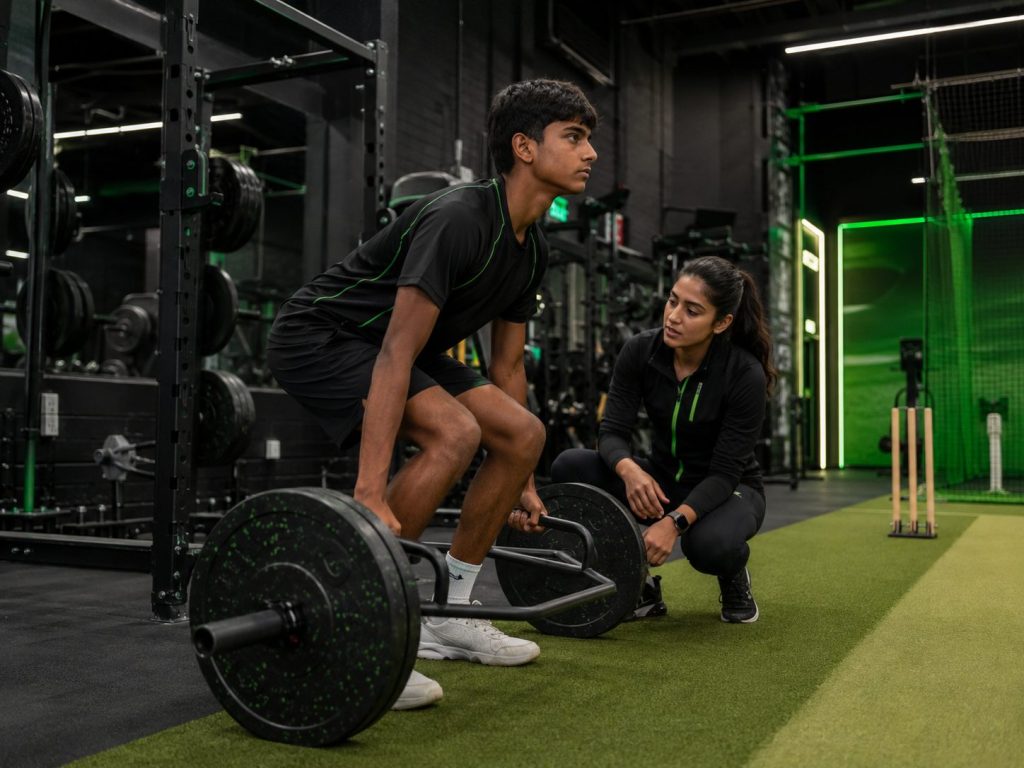
- Maximum strength
- Muscle development
- Force production
- Physical robustness
Training priorities:
- Squats
- Deadlifts
- Split squats
- Pulling strength
- Pressing strength
- Rotator cuff work
Cricket focus:
- Batting power
- Bowling durability
- Collision tolerance during fielding
Strength forms the foundation for power, speed, and resilience.
During this phase, players build the physical capacity required to produce force, tolerate bowling and fielding demands, and maintain performance across a long season.
However, strength training should remain technically sound. The goal is not simply to lift heavier weights. Instead, players must improve force production while maintaining movement quality and joint control.
For more on developing force quickly, read EvoFitLab’s Rate of Force Development Training guide.
Coach’s message:
Strong athletes stay available.
Phase 4: Power and Speed Development

Weeks 7 to 8
Objectives:
- Explosiveness
- Acceleration
- Maximum velocity
- Rotational power
Training priorities:
- Sprint training
- Plyometrics
- Medicine ball throws
- Olympic lift variations
- Power circuits
Cricket focus:
- Fast bowling speed
- Bat swing velocity
- Explosive fielding
Once the strength foundation is established, the program shifts toward speed and power.
Players now learn to express force more quickly. Sprint work develops acceleration and maximum velocity, while plyometrics improve elastic strength and reactive movement.
Rotational medicine ball throws also connect strength with the movements used in batting, bowling, and throwing.
The aim is not to replace strength. Instead, this phase converts strength into cricket performance.
Players who need a broader structure for combining strength, sprinting, jumping, and conditioning can review the Athletic Performance Exercise Protocol.
Coach’s message:
Convert strength into performance.
Phase 5: Cricket Performance Phase
Weeks 9 to 10
Objectives:
- Match fitness
- Repeat-sprint ability
- Bowling resilience
- Cricket-specific conditioning
Training priorities:
- Sprint intervals
- Repeat-sprint work
- Bowling conditioning
- Agility training
- Reactive movement
Cricket focus:
- Multi-day cricket
- T20 demands
- Repeated bowling spells
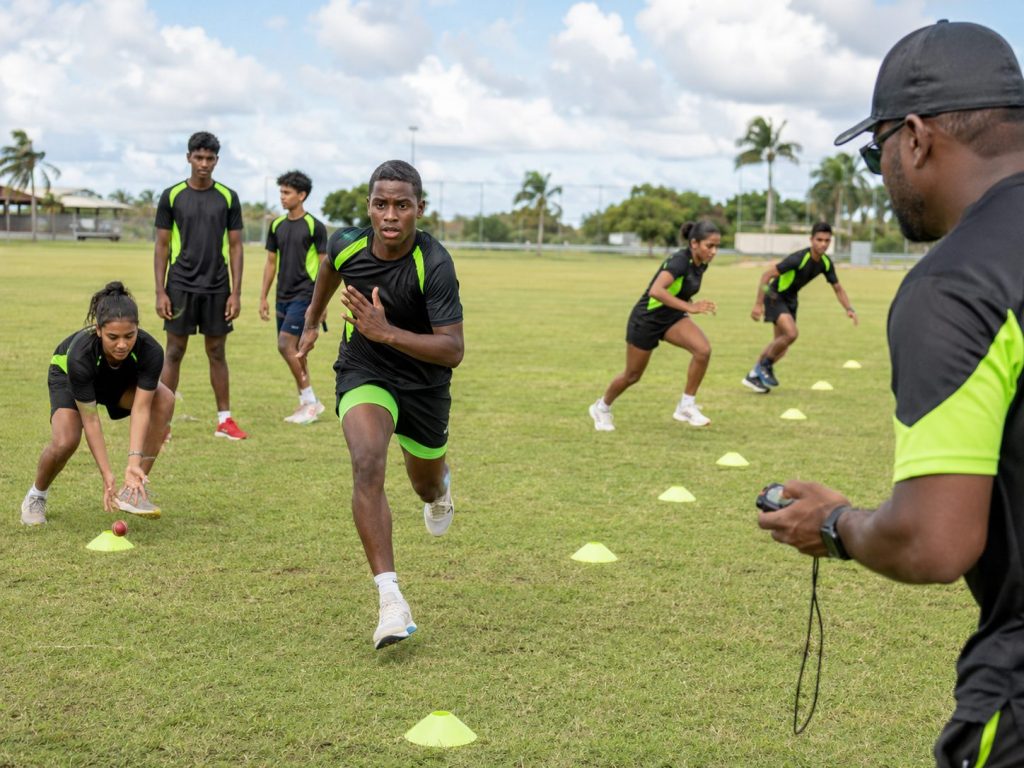
During this phase, training becomes more specific to the demands of competition.
Players must now repeat high-quality actions under controlled fatigue. Therefore, sessions should include sprint intervals, reactive fielding movements, bowling conditioning, and position-specific work.
T20 cricket requires explosive repeated efforts. In contrast, multi-day cricket demands sustained readiness and the ability to recover between spells, innings, and days.
The objective is not simply to make players tired. It is to prepare them for the work they will actually perform during competition.
Coach’s message:
Train for the demands of the game.
Phase 6: Pre-Season Peak
Weeks 11 to 12
Objectives:
- Maximum readiness
- Freshness
- Confidence
- Performance
Training priorities:
- Maintain intensity
- Reduce volume
- Maintain speed
- Maintain power
- Integrate cricket skills
Cricket focus:
- Match simulation
- Position-specific preparation
The final phase prepares players to enter pre-season ready to perform.
Training intensity should remain high enough to maintain speed, power, and confidence. However, total volume should decrease so players can recover and absorb the previous training phases.
This is not the time to introduce large amounts of new work. Instead, coaches should sharpen the qualities already developed and integrate them with cricket skills and match simulations.
Coach’s message:
Arrive ready, not exhausted.
EvoFitLab Cricket Performance Non-Negotiables
1. Sprint Exposure Every Week
Players must sprint every week.
Low sprint exposure followed by sudden spikes can increase injury risk and reduce readiness. Therefore, sprinting should remain present throughout the program, even when the volume is low.
The goal is consistent exposure, not random high-intensity sessions.
For more information on maintaining sprint quality, read EvoFitLab’s guide to Speed Endurance in Sprinting.
2. Strength Never Stops
Strength should be maintained throughout the year.
Players should not lose the physical qualities they worked hard to build. Although volume and exercise selection may change, strength remains part of off-season, pre-season, and in-season training.
3. Build Aerobic Fitness Early
Build the engine first.
Aerobic fitness supports recovery between repeated efforts and allows players to tolerate later speed, power, and cricket-specific conditioning.
Power sits on top of physical capacity. Therefore, early aerobic development creates a stronger base for the later phases.
4. Fast Bowlers Need Extra Protection
Fast bowlers require careful monitoring because of the repeated physical demands of bowling.
Coaches should monitor:
- Bowling loads
- Hamstring condition
- Calf condition
- Lower-back symptoms
- Shoulder health
- Recovery between bowling sessions
Research on fast-bowling workload patterns and injury risk supports consistent workload development and warns against sudden increases.
For younger players, EvoFitLab’s Youth Cricket Injury Prevention guide offers additional guidance for coaches and parents.
5. Recovery Is Training
Recovery includes:
- Sleep
- Nutrition
- Hydration
- Mobility
- Soft tissue care
- Athlete feedback
- Appropriate rest
Players should aim for age-appropriate sleep. Most adults require at least seven hours, while teenage athletes often need more. The CDC sleep recommendations provide guidance by age group.
Recovery is not separate from training. It determines how well players adapt to training.
Key Performance Metrics
Testing should help coaches measure progress objectively rather than rely on guesswork.
Speed
- 10 m sprint
- 20 m sprint
- Flying sprint
Power
- Vertical jump
- Broad jump
- Medicine ball throw
Strength
- Trap bar deadlift
- Split squat
- Pull-ups
Conditioning
- Yo-Yo test
- Bronco test
- Cricket-specific repeat-sprint testing
Wellness
- Sleep quality
- Fatigue
- Soreness
- Stress
Testing should occur at planned points in the program. Coaches should also use the results to adjust training rather than collect data without acting on it.
Performance monitoring helps answer important questions:
- Is the player getting faster?
- Is power improving?
- Is strength increasing?
- Is conditioning transferring to cricket?
- Is fatigue rising too quickly?
- Is the player recovering between sessions?
The Biggest Off-Season Mistakes Cricketers Make
Many players lose valuable preparation time because they wait too long or train without a structured plan.
Common mistakes include:
- Doing too much too soon
- Avoiding sprint training
- Only running without strength work
- Ignoring bowling loads
- Sleeping poorly
- Trying to get fit during the final two weeks
- Confusing fatigue with improvement
Feeling exhausted does not always mean training was effective.
A quality cricket off-season training program develops performance systematically. It challenges players while still allowing them to recover, improve, and remain available.
Players experiencing persistent pain, repeated injuries, or difficulty tolerating bowling and sprint workloads should receive an appropriate assessment before progressing intensity.
EvoFitLab Support Pillars
Nutrition
Fuel performance and support recovery.
Players need enough energy, protein, carbohydrates, fluids, and micronutrients to adapt to training.
Sleep
Aim for consistent, age-appropriate sleep.
Good sleep supports recovery, concentration, decision-making, and readiness.
Hydration
Hydration should be a daily habit, not something players consider only on competition day.
Sports Physiotherapy
Address physical issues before they become larger injuries.
Sports Science Monitoring
Measure progress objectively and use the data to improve programming.
At EvoFitLab, the cricket performance system combines strength and conditioning, speed development, sports physiotherapy, recovery, and monitoring. This integrated approach helps players prepare for the complete demands of cricket rather than training isolated qualities.
Conclusion
The EvoFitLab Cricket Off-Season Training Program follows a clear process:
Recover properly.
Rebuild systematically.
Develop athleticism.
Expose players to speed.
Prepare for performance.
Dominate the season.
The objective is not to arrive at pre-season exhausted. It is to arrive stronger, faster, more powerful, more resilient, and confident in the work completed.
Train. Recover. Perform.
To build a cricket performance plan around your role, injury history, and season schedule, explore EvoFitLab’s Athletic Development Services.
Written by Gerard Nicholas, CSCS, BSc Sports Science
Sports Physiotherapist and Strength and Conditioning Coach
EvoFitLab
LP14 Pentecostal Road, Tunapuna
Phone: 305-5482
Email: info@evofitlab.com
Website: https://evofitlab.com