


When it comes to losing weight, most people make one critical mistake. They try to drop the scale as fast as possible. In Trinidad and Tobago, where there is often a rush to get lean for Carnival or a competitive sporting season, extreme dieting is incredibly common. From a performance, health, and physique standpoint, that aggressive approach backfires far more often than it succeeds. To achieve true fat loss and muscle preservation, your body requires a strategic, evidence-informed approach rather than starvation.
The 500-Calorie Rule for Fat Loss and Muscle Preservation
Research across sports science points to a very clear physiological threshold. According to guidelines published by the American College of Sports Medicine (ACSM), a daily calorie deficit above approximately 500 calories significantly increases the risk of muscle loss, even if you are actively lifting weights.
Below that 500-calorie threshold, your body is highly capable of preserving lean muscle, maintaining strength, and supporting athletic recovery. Once you cross that line, you shift your biology from fat loss optimization directly into a state of muscle breakdown risk. Your body begins to consume its own functional tissue to survive the severe energy shortage.
What Smart Weight Reduction Actually Looks Like
For most individuals, a smart and sustainable plan involves a daily deficit of around 500 calories, resulting in roughly 0.5 to 1 pound of weight loss per week. This measured rate allows your body to mobilize fat stores efficiently while protecting your lean tissue.
Furthermore, this is the exact zone where we see lower injury risk, better hormonal stability, and much higher long-term adherence. If you are struggling to map out these nutritional strategies, exploring our EvoFitLab blog resources can help you align your daily dietary habits with a sustainable timeline.
Why Resistance Training Is Non-Negotiable
If your goal is to look athletic and perform well, rather than just becoming a lighter version of yourself, resistance training is absolutely essential. Heavy lifting sends a critical biological signal to your nervous system. It essentially tells your body that your muscle tissue is needed for survival and should not be burned for fuel.
Best practices dictate completing three to five resistance sessions per week. You must focus on compound lifts and progressive overload while maintaining your training intensity, even in a calorie deficit. If you need a structured environment to build this strength, our team at EvoFitLab provides the expert coaching required to keep your mechanics safe and effective.
Protein as Your Strategy for Fat Loss and Muscle Preservation
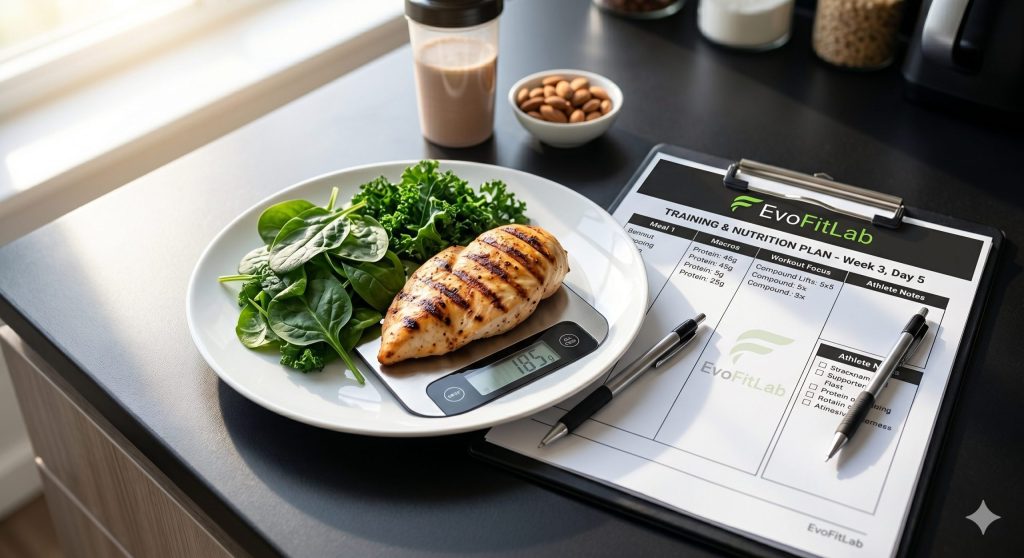
During a calorie deficit, your protein intake becomes your ultimate muscle insurance policy. Evidence-based targets from the International Society of Sports Nutrition (ISSN) recommend consuming 1.0 to 1.4 grams of protein per pound of lean body mass during periods of caloric restriction.
This specific macronutrient strategy matters for three distinct reasons. First, it directly supports muscle repair and retention. Second, it enhances satiety to help control hunger cravings. Finally, protein increases the thermic effect of food, meaning you actually burn more calories simply digesting your meals. In controlled clinical trials available on PubMed, athletes who maintained high protein intake and intense resistance training during a strict deficit were able to lose significant fat while actually gaining muscle.
The Real Dangers of Rapid Weight Loss
Muscle is not just about aesthetics. It directly impacts your metabolic rate, joint stability, and long-term injury prevention. When you lose muscle due to rapid weight loss, you actively slow your metabolism and increase your risk of rebound weight gain.
From a sports medicine perspective, rapid weight loss impairs your recovery capacity and drastically increases your susceptibility to training injuries. You will experience strength decline, chronic fatigue, and hormonal disruption. Do not sacrifice your athletic engine just to see a lower number on the scale.
Conclusion
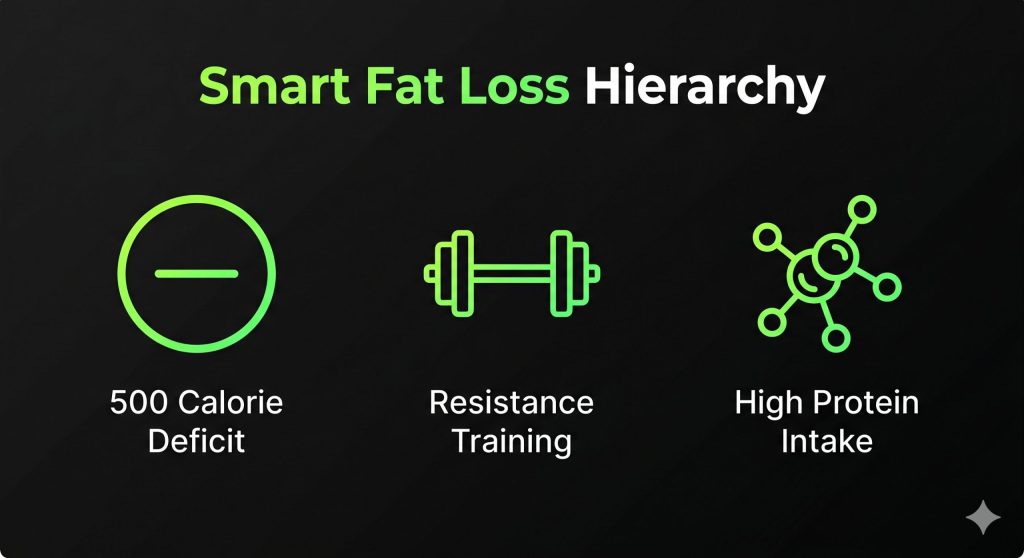
Smart fat loss requires patience, consistency, and precision. By maintaining a moderate calorie deficit, prioritizing your protein intake, and lifting heavy, you protect the lean tissue that drives your metabolism and athletic capability. Stop chasing rapid drops and start building a resilient physique.
Are you ready to optimize your body composition safely and effectively? Book a consult with Gerard Nicholas and the EvoFitLab team today.
Written by Gerard Nicholas, CSCS