
Helping Stroke Survivors in Trinidad & Tobago Move With Greater Confidence
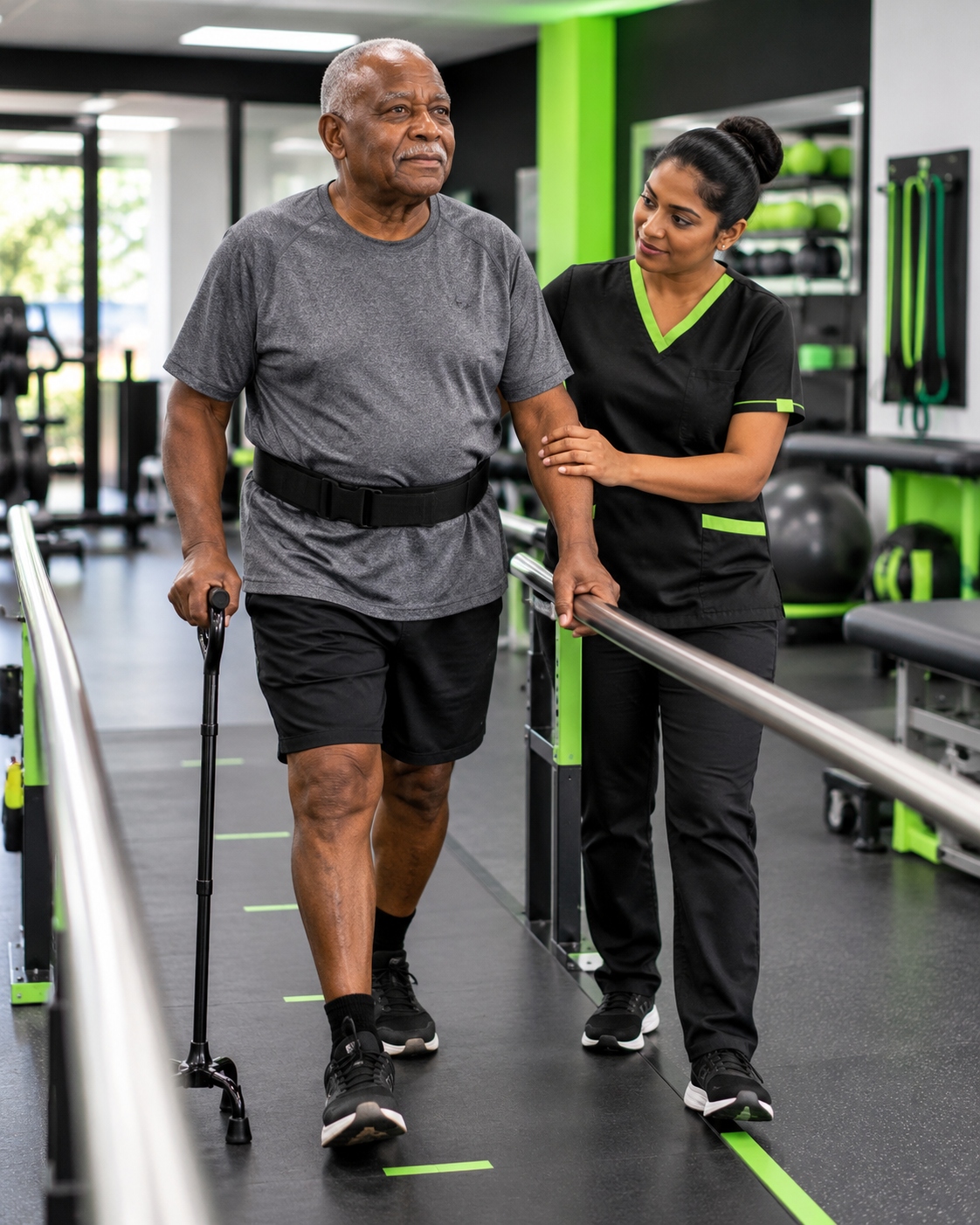
At EvoFitLab, we continue to work with individuals recovering from stroke, and one thing we see regularly is a change in the way a person walks.
Sometimes the steps become uneven. Sometimes more weight is placed on the stronger side. In other cases, the affected knee repeatedly moves backward or appears to “lock” during walking.
These changes can affect balance, confidence, walking efficiency, and independence.
The good news is that movement can be trained.
Stroke rehabilitation is most effective when exercise and movement practice are meaningful, repetitive, progressively challenging, and specific to the activities a person wants to improve, such as standing, stepping, and walking.
What Is Asymmetrical Stepping?
One common walking pattern after stroke is step or stance-time asymmetry.
In simple terms, this means that a person may spend more time supporting themselves on the stronger, unaffected leg and less time accepting weight through the affected leg.
Why does this happen?
There can be several reasons, including:
- Reduced strength
- Reduced balance or coordination
- Difficulty controlling the affected leg
- Fear of falling
- Reduced confidence when placing weight on the affected side
- Changes in muscle tone or spasticity
- Changes in sensation
- Habitual movement patterns that develop during recovery
It is important to remember that every stroke survivor is different. There is no single explanation for an abnormal walking pattern.
Your physiotherapist should assess the reason for the asymmetry rather than simply trying to make both legs look identical.
A Simple Way to Begin Working on Symmetry
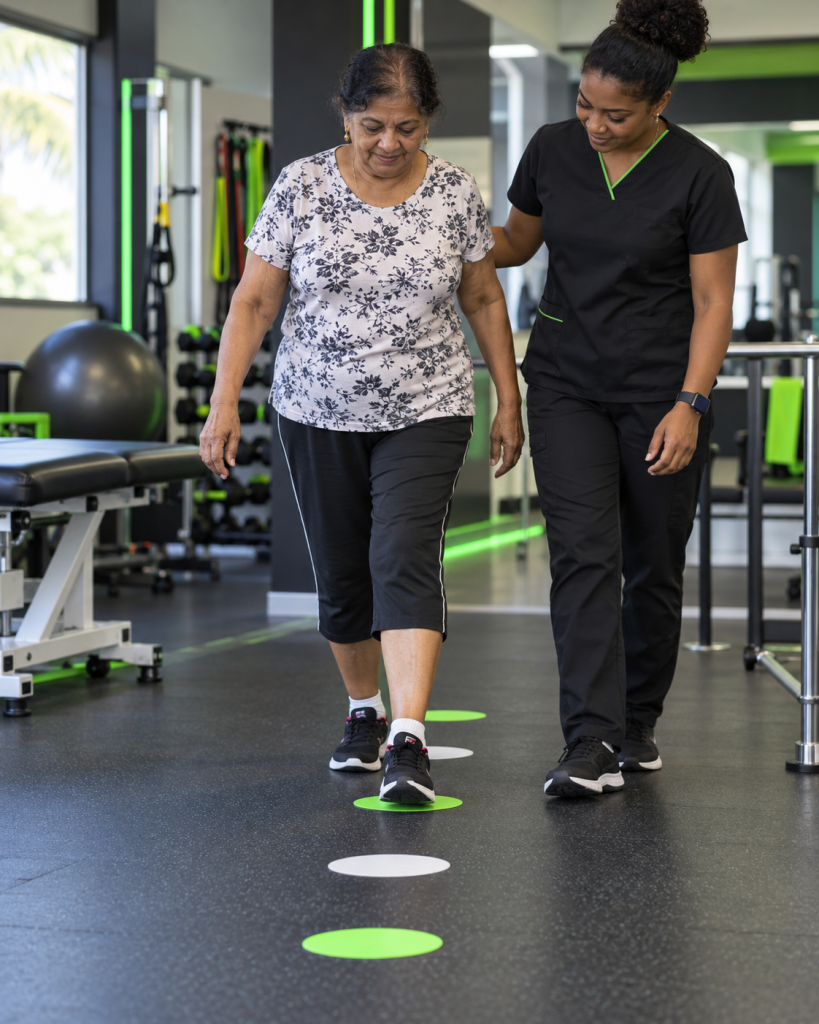
One useful strategy is to give your brain a visual target.
For example, a physiotherapist may place a piece of tape or another safe visual marker on the floor.
You can then practise controlled stepping toward or across the target, focusing on:
- Where am I placing my foot?
- How much weight am I putting through my affected leg?
- Can I control the movement rather than rushing through it?
Visual and auditory feedback can be incorporated into gait training to help improve lower-extremity function.
The objective is not simply to “force” symmetry.
The objective is to help you develop better control, confidence, and awareness of your affected side.
What About the Knee That Keeps Locking Back?
Another common concern we hear is:
“My knee keeps popping backward every time I walk.”
Sometimes, this can be related to weakness and difficulty controlling the leg.
However, weakness is not always the entire story.
After a stroke, changes in muscle tone, coordination, sensation, balance, and movement strategy can all influence how the knee behaves.
A person may initially use a stiff or extended knee as a strategy to feel more stable while standing or walking. Over time, that movement pattern can become familiar.
Research into knee hyperextension during post-stroke walking highlights the importance of individualized physiotherapy and movement control.
This is one reason why rehabilitation needs to look beyond simply asking:
“Is the muscle strong enough?”
We also need to ask:
- Can the person control the movement?
- Can they safely accept weight on the affected leg?
- Can they coordinate the hip, knee, and ankle during walking?
- Is increased muscle tone or spasticity contributing?
These questions help guide the rehabilitation plan.
Think “Soft Knee,” Not “Locked Knee”
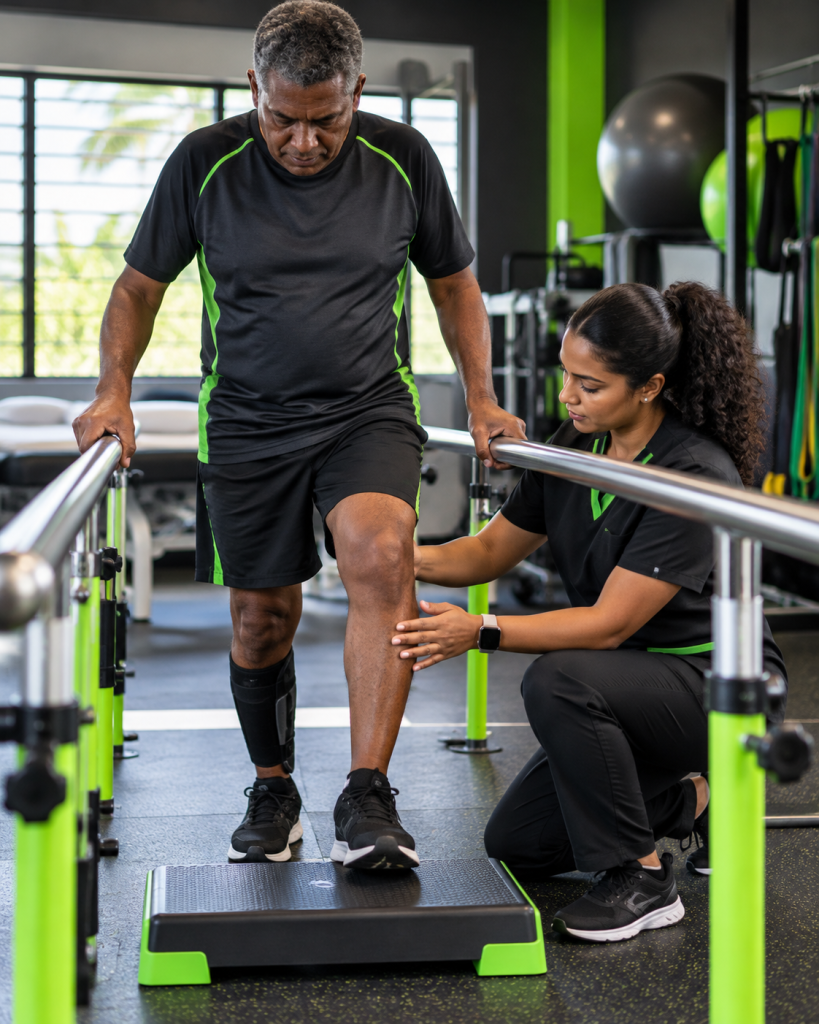
During appropriate stepping exercises, your physiotherapist may teach you to avoid aggressively snapping the knee backward.
A useful cue may be:
“Keep your knee over your toes.”
You can practise controlled forward and backward stepping while maintaining good alignment.
However, this exercise is not appropriate for everyone.
If you have significant weakness, poor balance, knee pain, uncontrolled movements, or a high risk of falling, you should not attempt challenging stepping exercises without appropriate professional guidance.
What About Crouch Walking?
Short periods of controlled crouch walking may sometimes be used as a movement-awareness exercise to help someone experience walking with more knee flexion.
Imagine that you are walking underneath a low ceiling.
Keep your knees slightly bent and take controlled steps.
This should not become your normal walking pattern.
It is simply one possible training strategy that a qualified physiotherapist may use, depending on the individual’s assessment and goals.
The key principle is quality movement, not simply doing more movement.
Stroke Rehabilitation Is More Than Walking
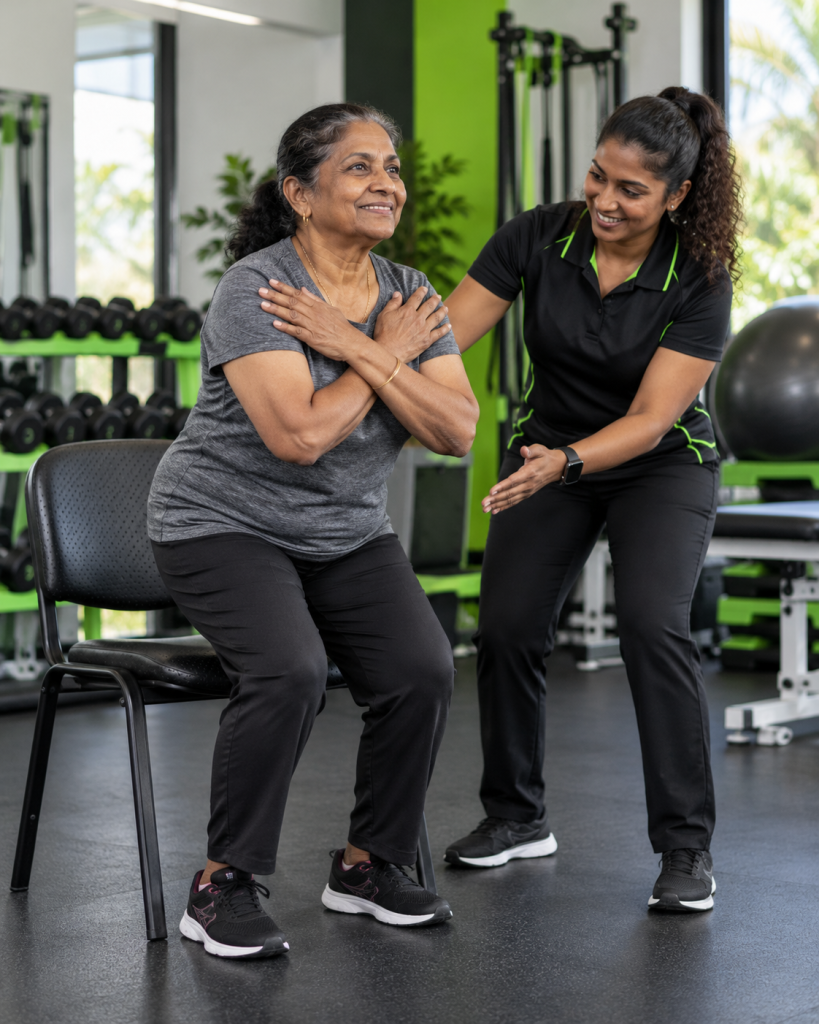
Walking is only one part of recovery.
A well-designed rehabilitation and exercise programme may also address:
Strength
Progressive resistance training can help improve lower-limb strength and motor function in appropriately selected stroke survivors.
Balance
Balance training can help improve confidence and the ability to move safely at home and in the community.
Cardiovascular Fitness
Appropriately prescribed aerobic exercise can improve fitness, walking ability, energy levels, and overall health. Exercise should be screened and individualized according to the person’s medical status and abilities.
Mobility
Repeated practice of meaningful activities such as sit-to-stand, stepping, and walking is an important part of stroke rehabilitation.
Confidence
Perhaps most importantly, rehabilitation should help the individual regain confidence in what their body can do.
For more information on combining movement practice, strength, and aerobic exercise, see EvoFitLab’s Stroke Rehabilitation for Athletes: 12-Week Guide.
Don’t Give Up Because Your Stroke Happened Years Ago
Stroke recovery does not necessarily end when formal rehabilitation finishes.
People living with chronic stroke can continue to benefit from appropriately designed exercise and physical activity.
The programme simply needs to be matched to the person’s current abilities, medical status, goals, and safety needs.
As the National Clinical Guideline for Stroke emphasizes, exercise and movement practice should be individualized and progressed appropriately rather than using a one-size-fits-all approach.
A Message From EvoFitLab
To the stroke survivors across Trinidad & Tobago:
Your current walking pattern does not have to define your future.
Your journey may be slower than you expected.
Some days may feel better than others.
Progress may come in small steps.
But every safe, purposeful repetition is an opportunity to teach your body and brain a better movement strategy.
At EvoFitLab, our goal is not simply to help you “exercise.”
Our goal is to help you move better, become stronger, improve your physical capacity, and regain confidence in your body.
If you or someone you love is living with the effects of stroke, speak with your healthcare team about an individualized rehabilitation and exercise programme.
Learn more about physiotherapy at EvoFitLab and our approach to rehabilitation and movement.
Move. Recover. Rebuild.
Gerard Nicholas, CSCS, BSc Sports Science
Physiotherapist
EvoFitLab
LP14 Pentecostal Road
Tunapuna, Trinidad & Tobago
Mobile: 305-5482
Email: info@evofitlab.com
Website: www.evofitlab.com
This information is for education and general guidance. It is not a substitute for an individual medical or physiotherapy assessment. Exercise selection and intensity should be determined according to each person’s abilities, medical status, and fall risk.