

Sprint acceleration can decide the first step to a ball, the breakaway in open space, or the ability to separate from an opponent. In football, rugby, cricket, basketball, athletics, and combat sports, those first few steps matter.
However, many athletes train acceleration with effort but poor structure. As a result, they repeat habits that limit speed potential, waste energy, and increase stress on the body.
At EvoFitLab, acceleration is not coached as “run harder.” It is coached as a skill that combines setup, projection, rhythm, strength, and coordination. These three sprint acceleration mistakes show up often, but each one can be corrected with better coaching.
Mistake 1: Ignoring the Setup Before the Sprint
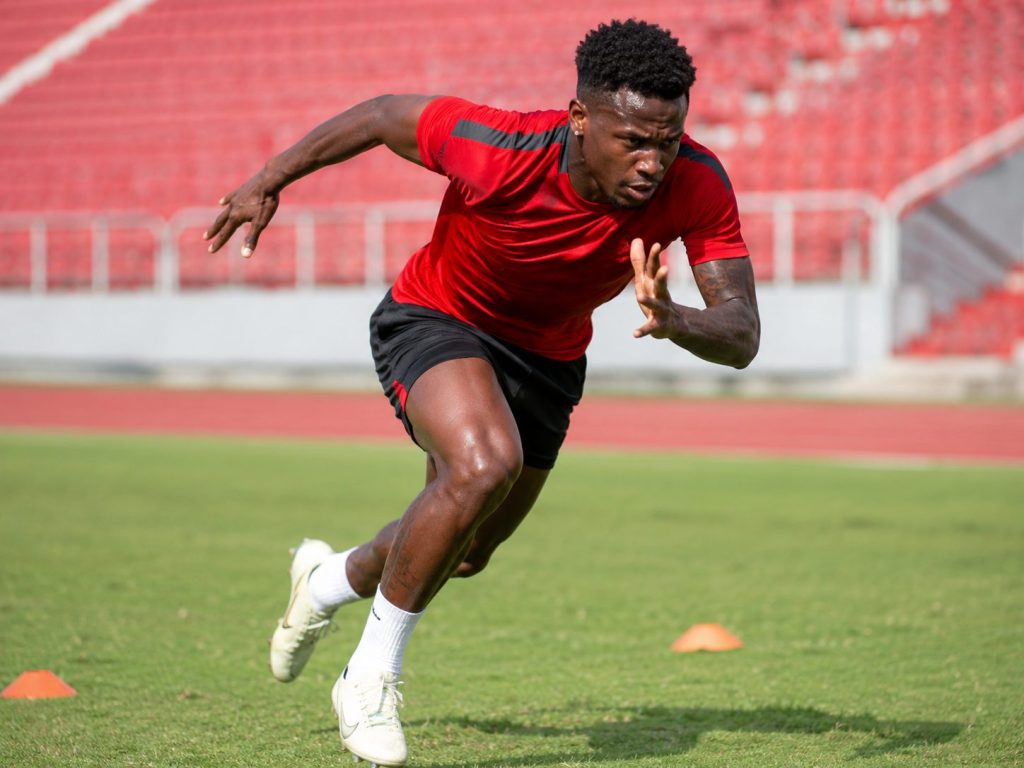
One of the biggest sprint acceleration mistakes is thinking the rep starts only when the athlete moves. In reality, the rep starts before the first step.
The setup determines how well the athlete can push into the ground, project the body forward, and find rhythm in the first strides. Research on sprint start biomechanics highlights the importance of horizontal propulsive force during early acceleration, while still allowing the athlete to rise naturally into upright sprinting. You can review this in the Sports Medicine sprint start biomechanics review.
A strong setup helps athletes:
- Produce better horizontal force
- Create useful shin angles
- Project the center of mass forward
- Reduce wasted movement
- Establish rhythm early
Poor setup often leads to:
- Popping up too early
- Reaching with the foot
- Losing forward projection
- Forcing the first step
- Breaking posture before speed builds
How to fix it
There is no perfect setup for every athlete. Body structure, limb length, mobility, strength, and sport demand all affect what works best.
Instead of forcing one rigid start position, test small changes in:
- Stance width
- Foot stagger distance
- Torso angle
- Hand placement
- Weight distribution
The goal is not to look textbook. The goal is to find the position that allows the athlete to project forward aggressively without tension.
For better movement preparation before acceleration work, use the Four Worlds Movement Framework to organize the trunk, hips, and ground connection before sprinting.
Mistake 2: Turning Every Sprint Into a Time Trial

Timing systems can be useful. They give feedback, create motivation, and help coaches track progress. However, timing becomes a problem when every sprint turns into a personal-best attempt.
When athletes chase the clock every rep, mechanics often break down.
Common issues include:
- Overstriding
- Reaching with the front leg
- Losing posture
- Creating unnecessary tension
- Forcing the sprint instead of flowing naturally
A faster time in one rep does not always mean better long-term development. Sometimes, the athlete simply found a way to fight through poor mechanics.
That matters because every rep teaches the nervous system something. If an athlete repeats poor movement under pressure, that pattern becomes familiar.
How to fix it
Use timing as feedback, not as the purpose of every session.
Some reps should focus on output. Others should focus on rhythm, projection, posture, or technical feel. Therefore, a smarter acceleration session might include:
| Rep Type | Main Goal | Coaching Focus |
| Technical build-up | Learn shape and rhythm | Smooth projection and posture |
| Acceleration rep | Apply force fast | First step, shin angle, body lean |
| Timed rep | Measure performance | Quality under pressure |
| Review rep | Learn from video | Correct one detail only |
This keeps athletes fast without making them tense.
For athletes who need to express force faster, pair sprint coaching with the principles in Rate of Force Development Training. Strength matters, but it must transfer into clean sprint mechanics.
Mistake 3: Overusing Resisted Sprinting
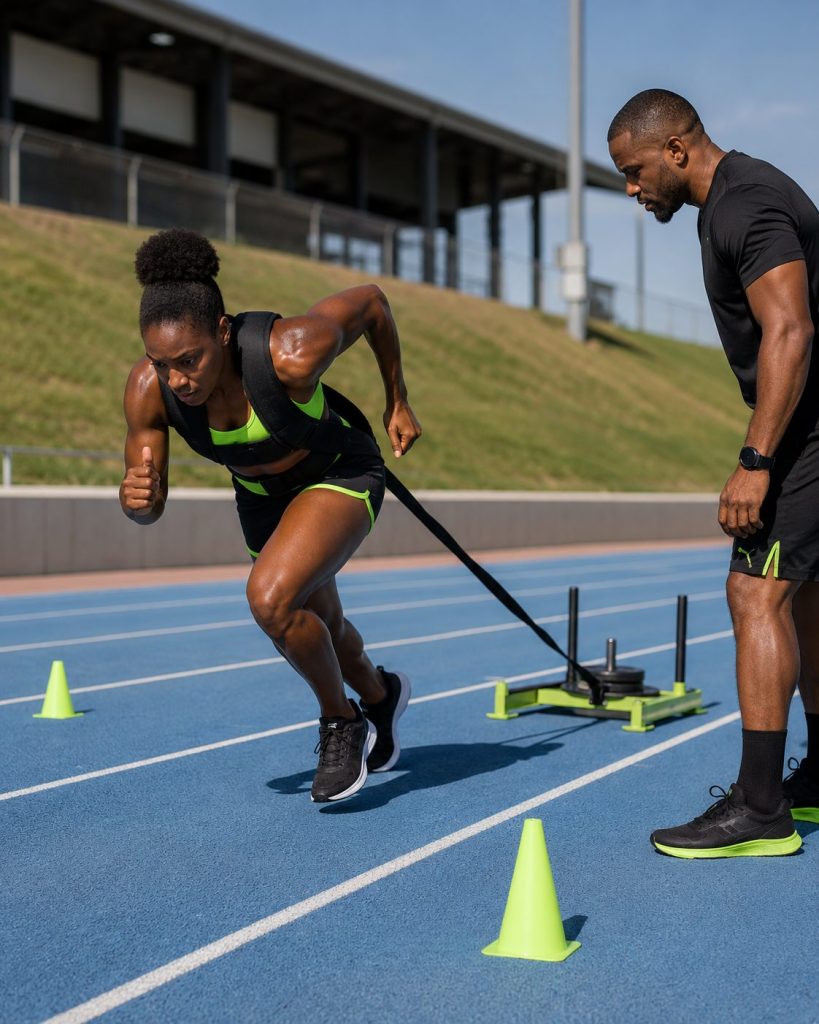
Resisted sprinting can be a powerful tool. Sled pushes, sled pulls, bands, and resisted runs can help athletes feel projection and produce force in early acceleration.
Research supports resisted sprint training as a useful method for improving acceleration, especially in short-distance sprint performance. A recent systematic review on resisted sprint training and acceleration found that resisted sprint methods can improve acceleration outcomes. Another review on resisted sled sprint training also supports its use when programmed correctly.
However, over-reliance creates a problem.
If every acceleration session is heavily resisted, athletes can get stuck in a long push pattern. Then, when resistance is removed, they may struggle to transition smoothly into upright sprinting.
That can lead to:
- Overpushing
- Poor leg cycling
- Late posture rise
- Reduced rhythm
- Heavy ground contacts
The tool starts changing the skill.
How to fix it
Resisted sprinting should support sprinting, not replace it.
A complete acceleration program should include:
- Unresisted accelerations
- Technical sprint drills
- Light and moderate resisted sprints
- Rhythm development
- Transition mechanics
- Max velocity exposure
- Strength and power training
Use resisted work to improve projection, then return to free sprinting so the athlete learns to apply that force naturally.
For yearly planning, use the Fitness Periodization Guide to organize resisted sprint work, max velocity exposure, and recovery across the training cycle.
Coaching the First Steps With More Precision
Acceleration is not just lower-body power. It is the ability to apply force in the right direction, at the right time, with the right posture.
Sprint research has shown that hip extensors and hamstrings play a major role in horizontal force production during acceleration. The sprint acceleration mechanics study on PubMed Central gives useful context for coaches who want to understand why force direction matters.
In practice, coaches should look for:
- Forward projection without collapsing
- Shin angles that match body angle
- Arms driving without crossing the body
- Foot contacts landing under or slightly behind the center of mass early
- A natural rise into upright sprinting
Do not overload the athlete with ten cues. Pick one correction per rep and let the athlete learn.
For youth athletes, progress sprint intensity and plyometric exposure carefully. The Youth Plyometric Pyramid Trinidad can help coaches layer jumps, landings, and elastic work without rushing the process.
Better Acceleration Training Session Structure
A quality acceleration session should build from preparation to execution.
Use this simple structure:
| Phase | Goal | Example |
| Movement prep | Organize hips, trunk, and ankles | Mobility, skips, wall drills |
| Setup practice | Find start position | 3-point or falling start rehearsals |
| Technical acceleration | Build rhythm | 10 to 20 m accelerations |
| Output reps | Express speed | Timed or competitive reps |
| Contrast work | Link force and speed | Light sled then free sprint |
| Review | Learn from the session | Video, coach notes, athlete feedback |
The key is sequencing. Athletes should not jump straight into maximal reps without preparation. They should earn intensity through quality movement.
For more performance education and related speed development resources, browse the EvoFitLab Blog.
Conclusion
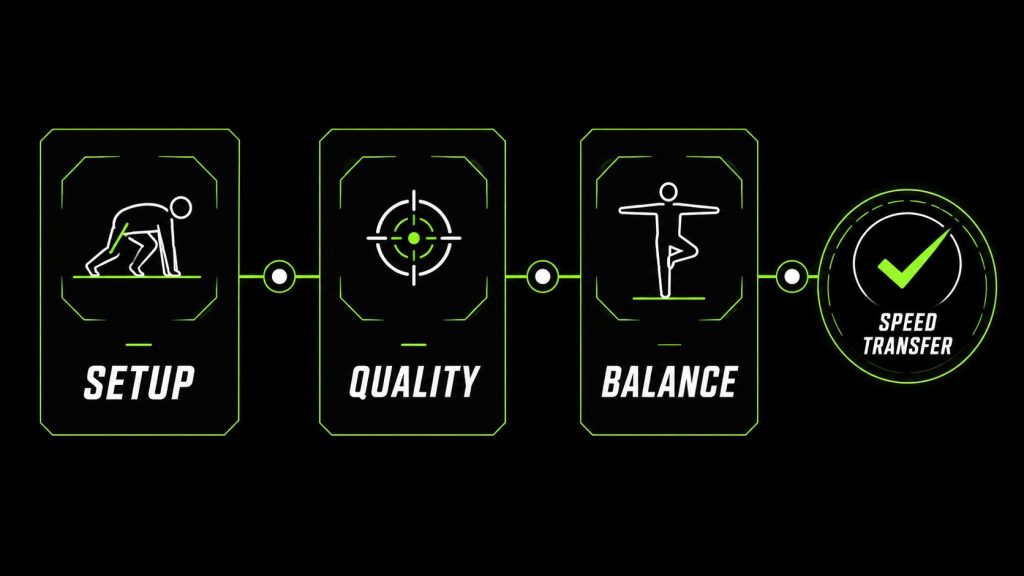
Sprint Acceleration Mistakes usually come from poor setup, too much chasing of times, or overusing resisted sprint tools. None of these problems require complicated fixes. They require better coaching decisions.
Set the athlete up properly. Use timing as feedback, not pressure. Apply resisted sprinting strategically. Then, let free sprinting teach the athlete how to move fast with rhythm and control.
Speed development is not only about effort. It is about precision, mechanics, and learning.
Need help improving first-step speed, projection, or acceleration mechanics? Contact EvoFitLab and build a sprint program that matches your sport, your body, and your performance goals.
Written by Gerard Nicholas, CSCS