
A practical guide for youth coaches, managers, parents, and fitness professionals in Trinidad & Tobago
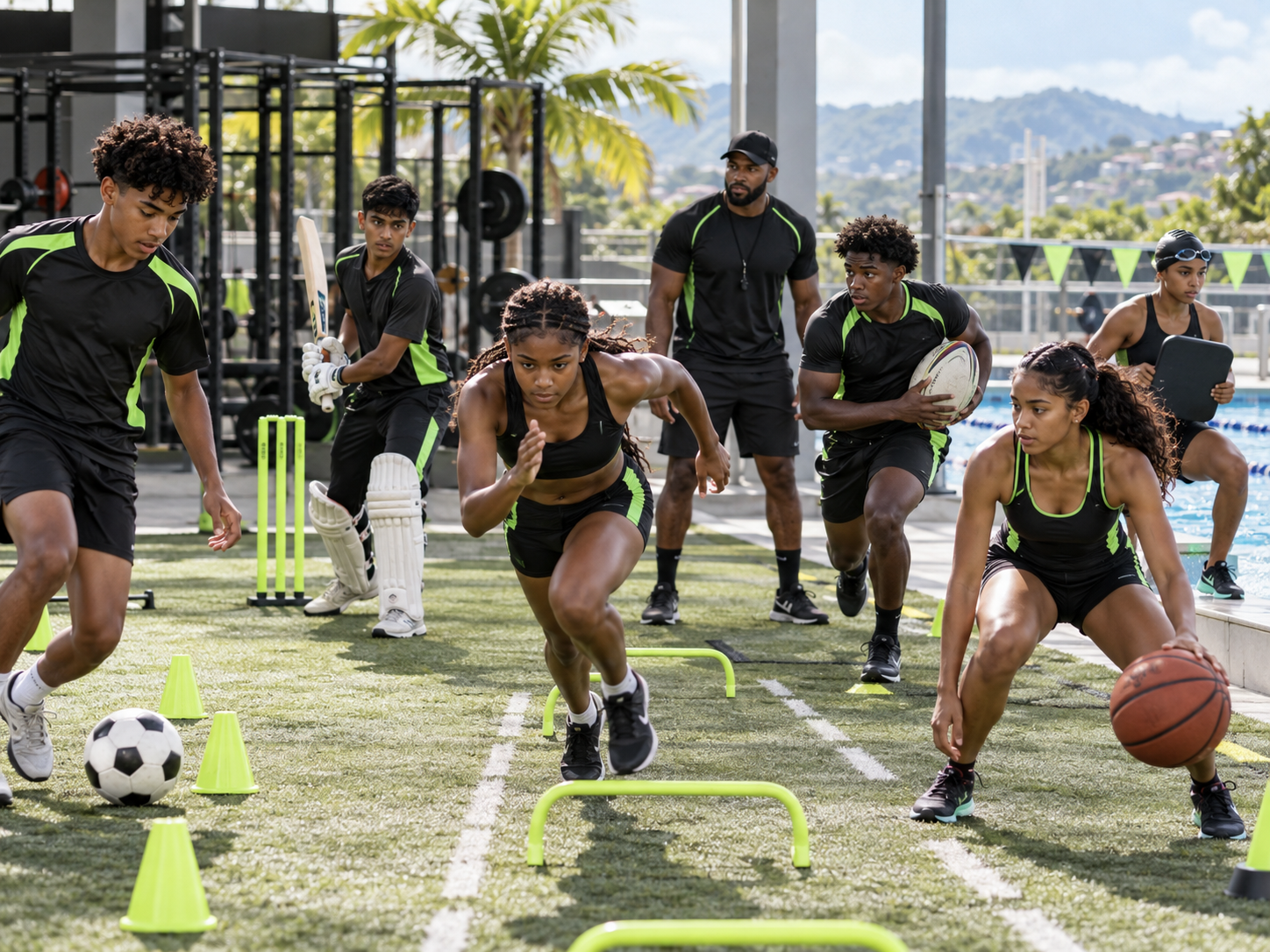
In Trinidad & Tobago, we have no shortage of athletic talent. From football and cricket to athletics, swimming, basketball, rugby, and other sports, our young people have tremendous potential.
But talent alone is not enough.
Developing a young athlete requires an understanding of strength, speed, conditioning, nutrition, recovery, movement quality, and, most importantly, appropriate long-term development.
At EvoFitLab, we believe parents, coaches, managers, and fitness professionals have a responsibility to understand why we train young athletes, not simply what exercises we put them through.
This philosophy also forms the foundation of our Youth Athlete Development Guide and our broader Youth Athletic Development Program.
One important place to start is understanding the body’s energy systems.
The Three Primary Energy Systems
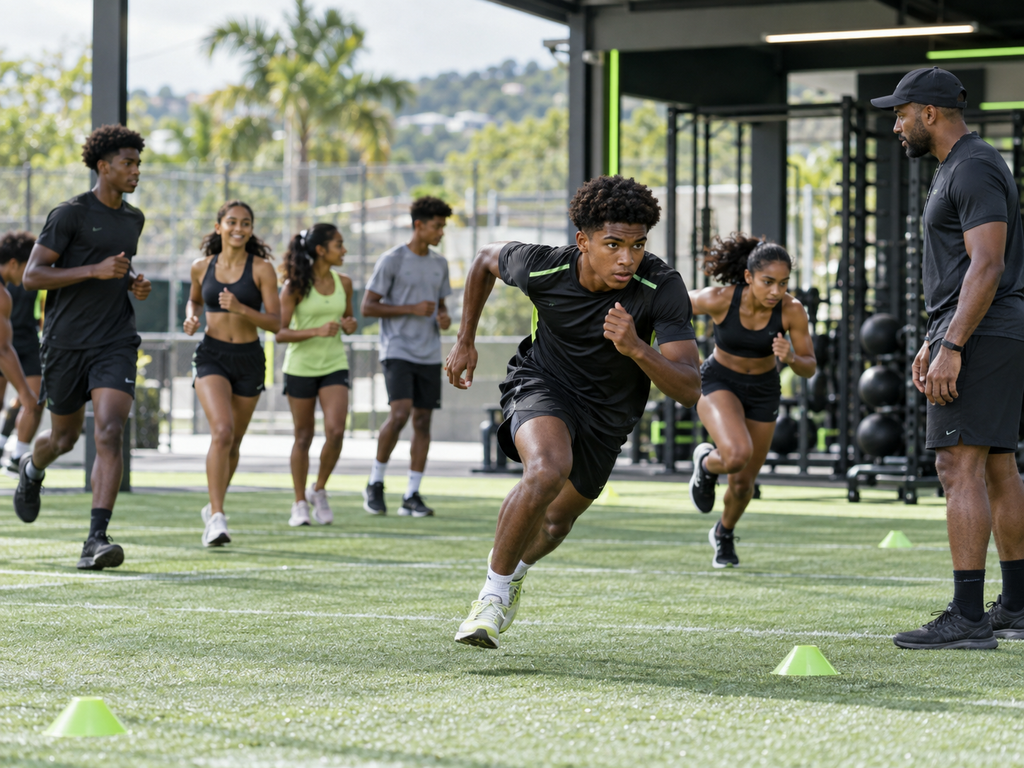
The human body produces energy through three overlapping energy systems. They do not operate like three separate switches. All three contribute to exercise, with the dominant system changing according to the intensity and duration of the activity.
1. ATP-PC System
The ATP-PC system, also called the phosphagen system, provides very rapid energy for explosive activities.
Think about:
- A 10 to 20 metre sprint
- A maximal jump
- A powerful throw
- A heavy strength exercise
- A short acceleration
- An explosive change of direction
This system is extremely important for developing speed and power.
Because these efforts are highly intense, they generally require adequate recovery between repetitions if the goal is to maintain high-quality speed or power.
2. Anaerobic Glycolytic System
The anaerobic glycolytic system becomes increasingly important during hard efforts that last longer than a few seconds and continue into the short-duration, high-intensity range.
Examples include:
- Repeated sprint efforts
- High-intensity intervals
- Hard runs during games
- Extended bouts of intense activity
This system relies heavily on carbohydrate metabolism and contributes to energy production when the demand for energy is too high to be met primarily through oxidative metabolism.
3. Aerobic or Oxidative System
The aerobic system uses oxygen to produce energy and becomes increasingly important as exercise continues.
It supports:
- Longer-duration activity
- Recovery between high-intensity efforts
- Repeated efforts during training and competition
- General cardiovascular fitness
- Daily activity and recovery
A common misconception is that aerobic training is only useful for endurance athletes.
It is not.
A well-developed aerobic system can help an athlete recover between repeated high-intensity efforts, which is particularly relevant to field and court sports.
Why Does This Matter to Youth Coaches?
Because conditioning should have a purpose.
A football player does not simply need to be able to “run a lot.”
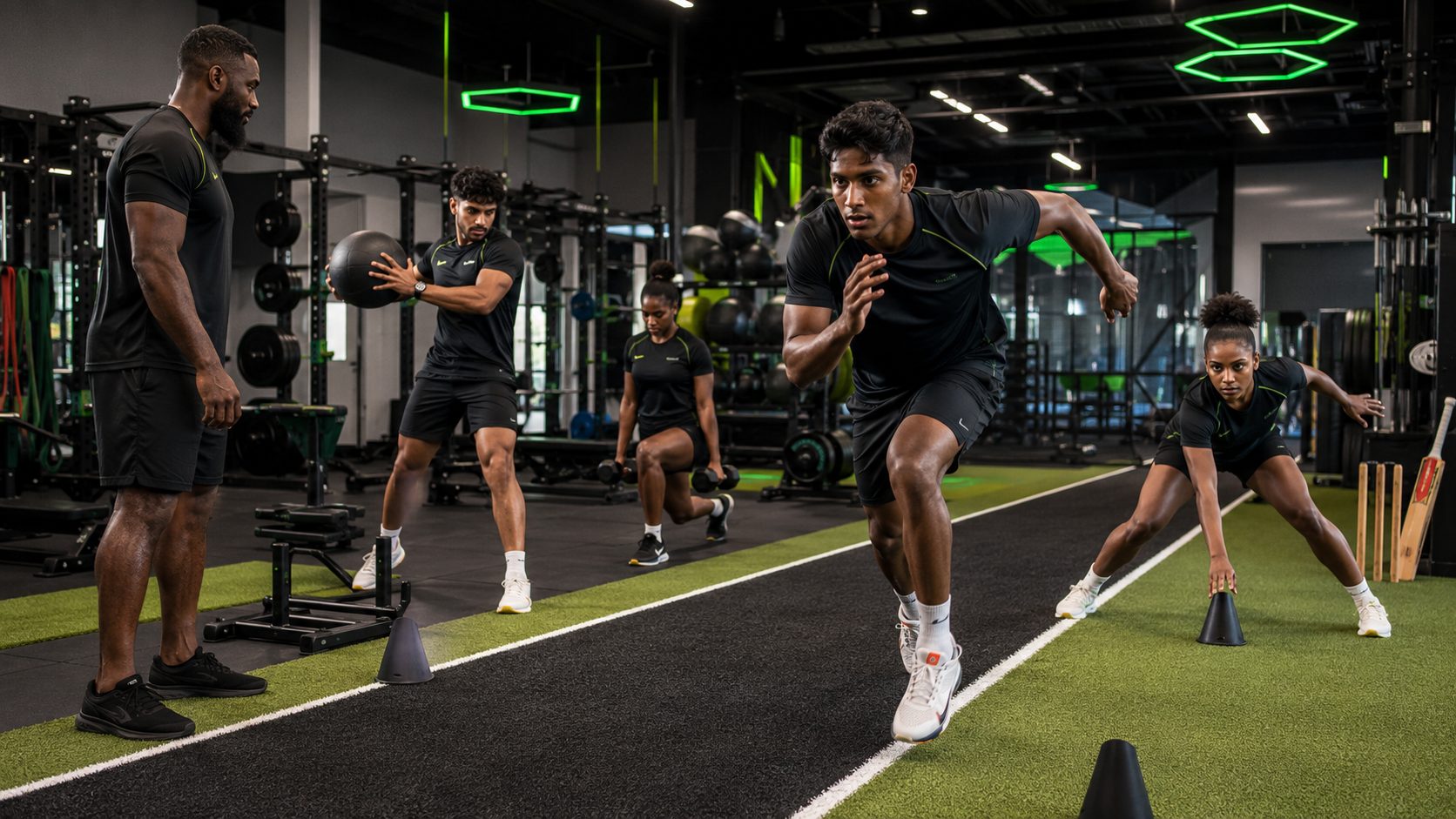
A good youth development program should progressively develop the athlete’s ability to:
Accelerate → decelerate → change direction → sprint → recover → repeat.
The demands should also be appropriate for the athlete’s age, biological maturation, training experience, and sport.
A 12-year-old should not automatically be trained like an 18-year-old simply because they play the same sport.
The NSCA’s guidance on youth training and long-term athletic development emphasizes appropriate progression, physical literacy, motor skills, foundational strength, and consideration of growth and maturation.
For a more detailed EvoFitLab framework, review our Youth Athlete Development Framework.
What About the “Skinny-Fat” Problem?
The term “skinny fat” is commonly used to describe someone who appears relatively light or slim but has comparatively low muscle mass and higher body-fat levels.
For young people, however, we need to be particularly careful with this terminology.
Children and adolescents are growing.
Their bodies are changing rapidly, and body composition naturally changes throughout puberty. Parents and coaches should avoid making young athletes feel that their bodies are inadequate or that they need to aggressively diet.
The objective should be:
Build strong, capable, confident young people, not chase a particular physique.
If there are genuine concerns about a young person’s growth, nutrition, or body composition, parents should seek an assessment from an appropriately qualified healthcare professional.
Protein: Are Young Athletes Eating Enough?

Protein is important for growth, tissue repair, adaptation to training, and maintenance of lean tissue.
But the answer is not simply:
“More protein is always better.”
Young athletes need adequate total energy and a balanced diet, not just protein.
A good nutritional foundation includes:
- Protein-rich foods
- Carbohydrate-rich foods for training fuel
- Healthy fats
- Fruits and vegetables
- Adequate fluids
- Calcium and vitamin D sources
- Iron-rich foods
- Sufficient overall calories
For a growing athlete, chronically restricting calories can be counterproductive.
If an adolescent is training hard but consistently eating too little, this can affect growth, recovery, performance, mood, concentration, and overall health.
Research and sports nutrition guidance for adolescent athletes emphasize that young athletes have nutritional requirements related to both training and normal growth and development. Sports nutrition guidance for adolescent athletes on PubMed
That is why parents should be cautious about putting young athletes on restrictive diets simply because they want them to “get lean.”
A Practical Calorie Strategy
For adults pursuing fat loss, a modest calorie deficit can be appropriate.
For growing athletes, however, calorie restriction should never be the default strategy.
Instead, ask:
Is the athlete eating enough to support growth, school, training, and recovery?
Look at the athlete’s:
- Training schedule
- Appetite
- Growth pattern
- Energy levels
- Recovery
- Performance
- Sleep
- Mood
- Overall health
If there are concerns about inadequate energy intake, disordered eating, unexpected weight changes, or delayed growth, involve a qualified sports dietitian, doctor, or other appropriate healthcare professional.
For adult athletes, a practical starting point for fat loss is generally a small calorie deficit rather than extreme dieting. A reduction of approximately 200 to 400 calories per day can be used as a starting point, followed by monitoring of body weight, performance, recovery, and hunger.
The goal is not to lose weight as quickly as possible.
The goal is to lose unnecessary body fat while maintaining performance and lean tissue.
Strength Training for Young Athletes
One of the biggest misconceptions we still encounter is:
“Young people shouldn’t lift weights because it will stunt their growth.”
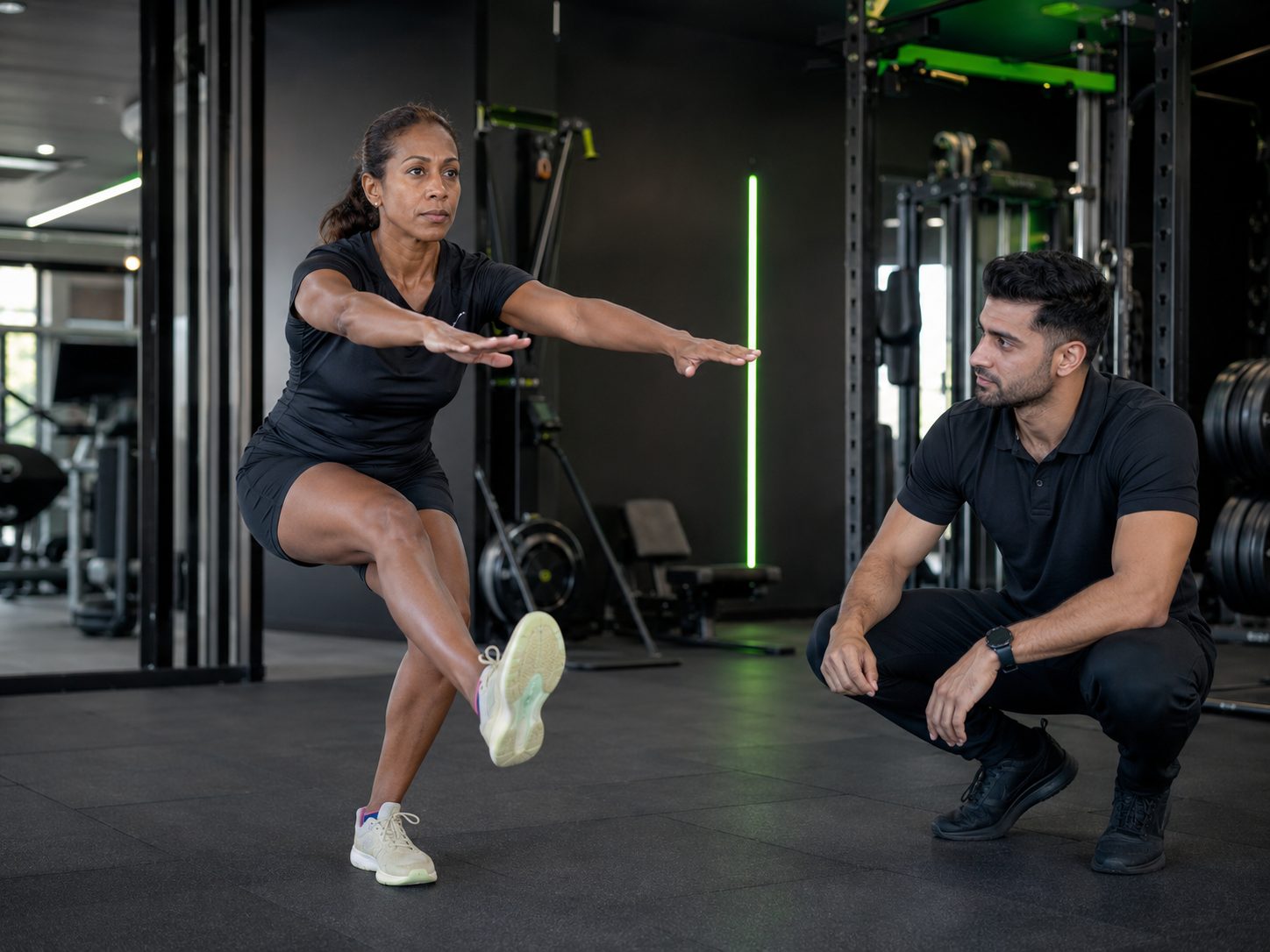
When appropriately designed, supervised, and progressed, resistance training can be an important component of youth athletic development.
The NSCA Youth Resistance Training Position Statement supports properly designed and supervised resistance training for children and adolescents.
The emphasis should be on:
- Learning fundamental movement patterns
- Developing coordination
- Building strength progressively
- Improving balance and stability
- Developing force production
- Teaching safe training habits
- Building confidence
The program should match the athlete, not the other way around.
Before worrying about how much weight an athlete can lift, teach them how to move well, control their body, and execute the exercise properly.

Speed Training Is Not Just Running Fast
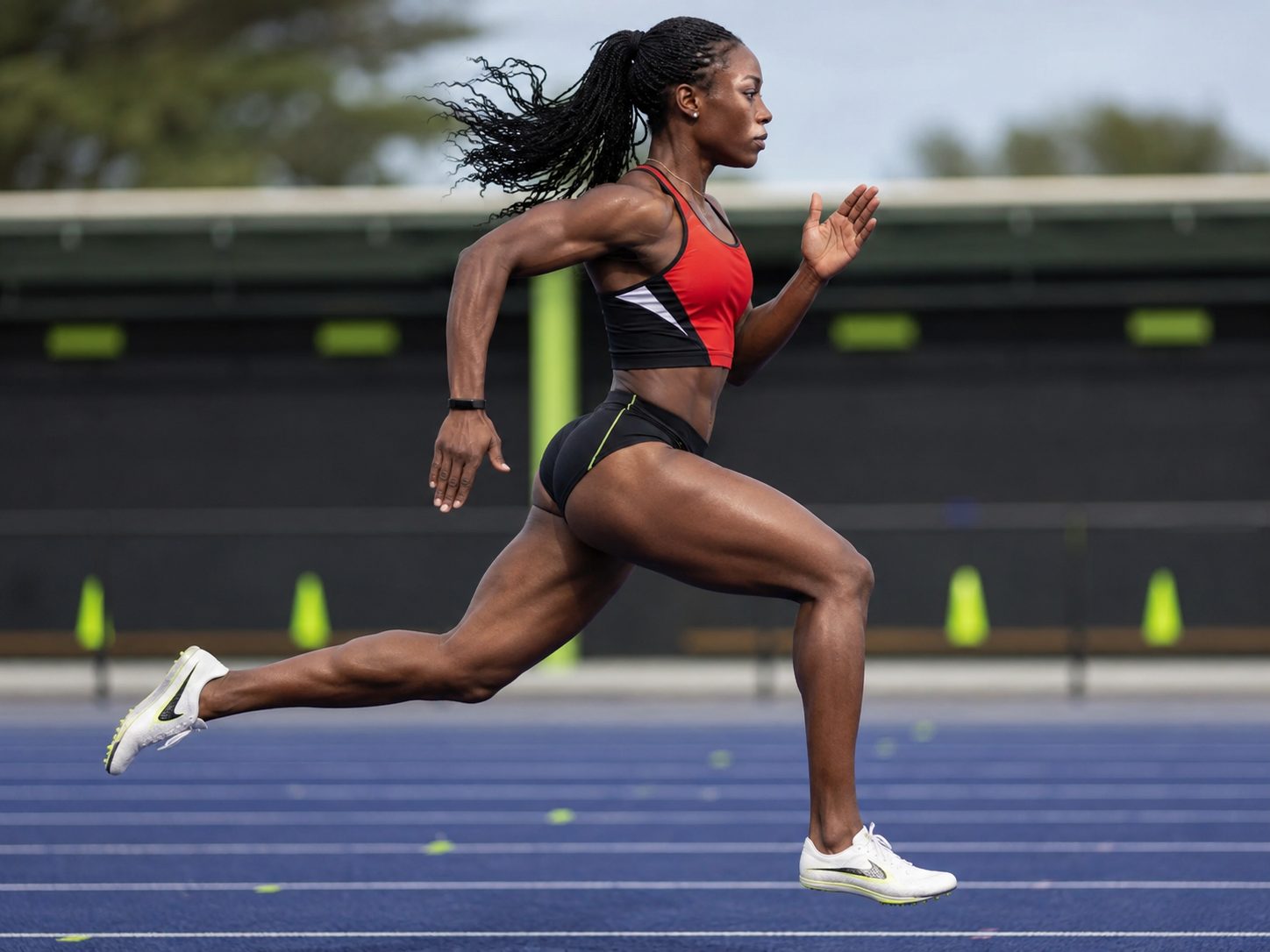
Speed is a skill.
Young athletes need opportunities to learn:
- Starting mechanics
- Acceleration
- Maximum-velocity mechanics
- Braking and deceleration
- Change of direction
- Reaction
- Coordination
- Sprint technique
One of the biggest mistakes coaches make is turning every speed session into conditioning.
If the objective is to improve speed, athletes need high-quality repetitions with adequate recovery.
Fatigue has a place in conditioning.
It does not belong in every speed session.
For more on maintaining sprint quality instead of simply creating fatigue, see EvoFitLab’s Speed Endurance Training for Athletes.
Progressive Overload Does Not Mean “Go Heavy Every Week”
Progressive overload simply means that training needs to provide an appropriate stimulus that develops over time.
Progression can come from:
- Better technique
- More repetitions
- Greater range of motion
- Increased resistance
- More challenging variations
- Improved speed
- Better control
- Increased training volume
- Reduced rest when appropriate for the goal
For youth athletes, progression should be gradual and individualized.
The objective is not to see how much punishment an athlete can tolerate.
The objective is to create an environment where the athlete can consistently adapt.
Recovery Is Training Too

A young athlete cannot perform at their best if recovery is neglected.
Recovery includes:
Sleep + nutrition + hydration + appropriate training load + rest + psychological well-being.
Parents and coaches should pay attention to signs that an athlete may be struggling with excessive training or inadequate recovery, including:
- Persistent fatigue
- Declining performance
- Loss of motivation
- Poor sleep
- Persistent soreness
- Recurrent injuries
- Irritability or mood changes
- Difficulty concentrating
- Changes in appetite
More training is not automatically better.
Better training is better.
Regular physical activity is important for young people, but it should be appropriate for their age and development. The World Health Organization’s physical activity guidance for children and adolescents provides broader recommendations for youth activity and health.
The EvoFitLab Youth Development Philosophy
At EvoFitLab, our goal is not simply to make young athletes tired.
We want to help develop athletes who are:
Strong.
Fast.
Mobile.
Conditioned.
Well-nourished.
Resilient.
Educated.
Confident.
And capable of enjoying sport for the long term.
For Trinidad & Tobago to continue developing world-class athletes, we need to develop something just as important as athletic talent:
Educated sporting communities.
Parents need to understand nutrition.
Coaches need to understand training load.
Managers need to understand athlete development.
Fitness professionals need to understand youth-specific programming.
Young athletes need to understand why they are doing what they are doing.
When everyone understands the process, we give our young athletes a much better chance to perform, develop, and stay healthy.
The Bottom Line
Do not chase exhaustion.
Do not chase extreme dieting.
Do not chase adult training methods for children.
Do not chase physiques.
Build the athlete.
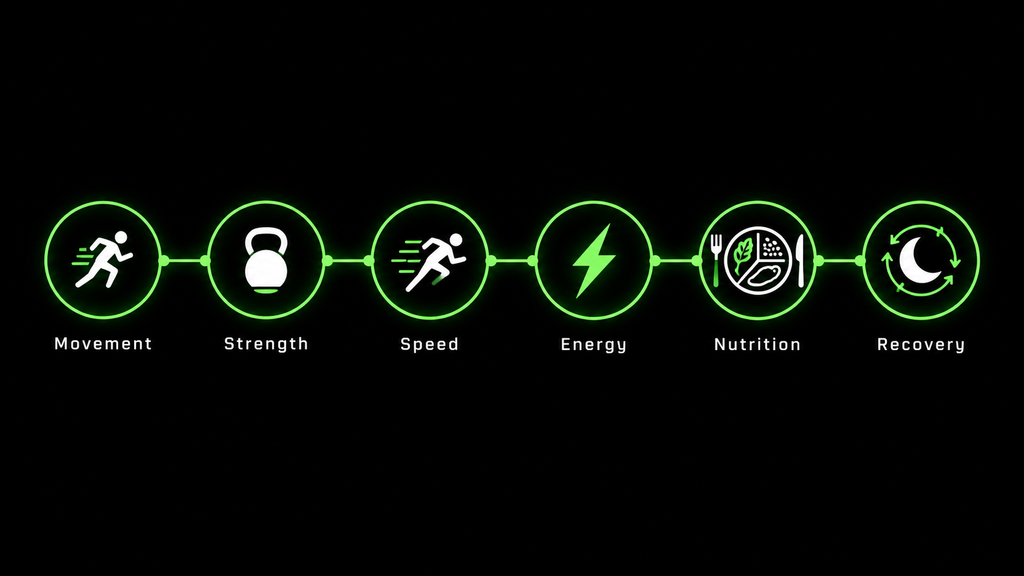
Develop movement first.
Develop strength progressively.
Develop speed intelligently.
Develop the energy systems according to the demands of the sport.
Provide adequate nutrition.
Prioritize recovery.
Create an environment where young people can develop physically and psychologically.
That is how we build better athletes and healthier human beings.
Gerard Nicholas, CSCS, BSc Sports Science
Physiotherapist
EvoFitLab
LP14 Pentecostal Road, Tunapuna
Mobile: 305-5482
Email: info@evofitlab.com
Website: evofitlab.com