


Coaching & Training Diabetic Athletes requires understanding physiology without fear-based decisions. Diabetes is not a performance ceiling. Instead, it is a variable that must be respected, monitored, and programmed around with intent.
This EvoFitLab pillar resource equips coaches, performance managers, and support staff with practical systems to train diabetic athletes safely across youth, amateur, and elite sport.
EvoFitLab Core Coaching Principle
We do not train conditions. We train humans.
With education, structure, and communication, diabetic athletes can train hard, recover well, and compete without restriction. Fear-based coaching creates risk. Intelligent systems reduce it.
Who This Guide Is For
This guide is designed for professionals operating in real training environments:
- Directors of performance and sporting managers
- Strength and conditioning coaches
- Speed, agility, and athletic development coaches
- Sports physiotherapists and rehab specialists
- Nutritionists and integrated support staff
This is not a medical textbook. Instead, it is a performance-led framework built for training floors, pitches, courts, and competition settings.
Understanding Diabetes in Sport
Types of Diabetes
- Type 1 Diabetes (T1D): Autoimmune condition requiring lifelong insulin management
- Type 2 Diabetes (T2D): Insulin resistance managed through training, nutrition, and medication
- Pre-diabetes: Early metabolic dysfunction where intervention is critical
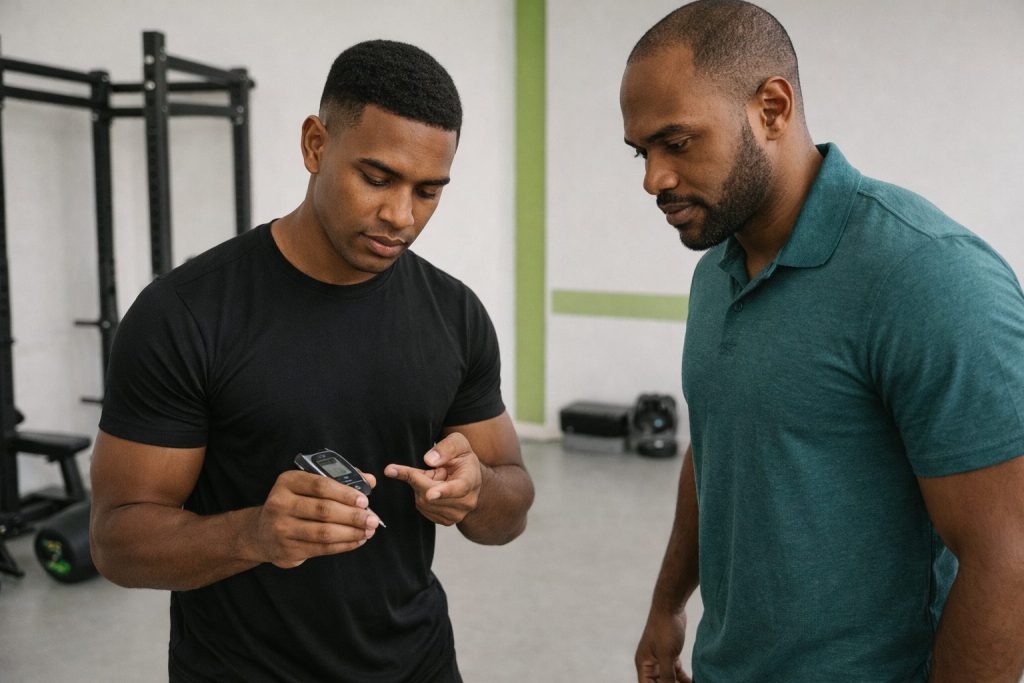
Exercise has a direct and measurable effect on blood glucose regulation. Because of this, coaches must understand how training variables interact with glucose control.
Authoritative context: American Diabetes Association position statements on exercise and diabetes (https://diabetesjournals.org) and PubMed research summaries (https://pubmed.ncbi.nlm.nih.gov).
How Training Impacts Blood Glucose
Different training qualities produce different glucose responses.
- Aerobic training generally lowers blood glucose
- High-intensity and speed work may temporarily elevate glucose due to adrenaline response
- Strength training often stabilizes glucose and improves long-term insulin sensitivity
Key takeaway: programming decisions influence glucose outcomes. Therefore, session structure matters.
For integrated movement preparation that supports metabolic stability, use the Four Worlds Movement Framework.
Strength & Conditioning Guidelines for Diabetic Athletes
EvoFitLab coaching standards prioritize safety without limiting output.
- No fasted high-intensity training
- Carbohydrates always accessible during sessions
- Flexible rest and fueling breaks allowed
- Progressive overload balanced with glucose stability
Ideal Pre-Session Glucose Range
100 to 180 mg/dL (5.6 to 10 mmol/L)
Sessions should be adjusted, not cancelled, unless safety thresholds are exceeded. This aligns with guidance from the American College of Sports Medicine and ADA exercise recommendations.
Speed, Power, and High-Intensity Training
Speed and power work are not contraindicated for diabetic athletes. Instead, they require planning.
Best practices include:
- Scheduling sessions earlier in the day when glucose is more stable
- Managing work-to-rest ratios carefully
- Pairing high-intensity work with adequate carbohydrate intake
- Monitoring post-session glucose trends
When athletes transition back to maximal intent work, apply principles from Rate of Force Development Training.

Injury Prevention & Physiotherapy Considerations
Diabetes does not inherently increase injury risk. Poor systems do.
Key considerations:
- Monitor tissue health, circulation, and sensation
- Emphasize ankle, foot, and tendon integrity
- Respect recovery timelines
- Use low-intensity aerobic work post-session to stabilize glucose
For loading strategies and long-term planning, reference the Fitness Periodization Guide.
Nutrition Principles for Diabetic Athletes
Performance remains fuel-dependent.
- Balanced meals with protein, complex carbohydrates, and healthy fats
- Strategic carbohydrate timing around training
- Avoid long gaps between meals during heavy training phases
Diabetes does not change the fueling rule. It reinforces it.
Evidence-based nutrition guidance can be cross-referenced through the International Olympic Committee consensus statements and PubMed nutrition research (https://pubmed.ncbi.nlm.nih.gov).
Managing Risk: Hypoglycemia & Hyperglycemia
Hypoglycemia (Low Blood Sugar)
Common signs include shaking, dizziness, confusion, and sweating.
Immediate response:
- 15 to 20 g of fast-acting carbohydrates
- Re-check glucose after 15 minutes
Hyperglycemia (High Blood Sugar)
Common signs include excessive thirst, fatigue, and frequent urination.
Response steps:
- Hydration
- Delay intense training if levels remain excessively elevated
Clear protocols reduce panic and protect performance.
Return-to-Play Framework
Use a structured progression:
- Medical stability
- Controlled training exposure
- Performance reintegration
- Full training and competition
Communication between athlete, coach, and medical staff is non-negotiable.
Sport-Specific Coaching Considerations
- Team sports: High variability requires planned monitoring opportunities
- Endurance sports: Continuous fueling is essential
- Combat and weight-class sports: Avoid aggressive weight manipulation
- Youth sport: Education-first, parent-inclusive approach
- Elite sport: Data-driven, interdisciplinary management
For youth-specific loading and safety progressions, see the Youth Plyometric Pyramid Trinidad.
Emergency Action Planning
Every facility working with diabetic athletes should have:
- Identified athletes
- Accessible emergency carbohydrates
- Trained staff
- Clear escalation protocols
Prepared environments create confident athletes.
EvoFitLab Coach Checklists
Before Training
- Glucose checked
- Athlete reports readiness
- Fuel available
During Training
- Monitor symptoms
- Allow breaks when needed
After Training
- Glucose re-check
- Recovery nutrition completed
- Athlete feedback logged
Conclusion
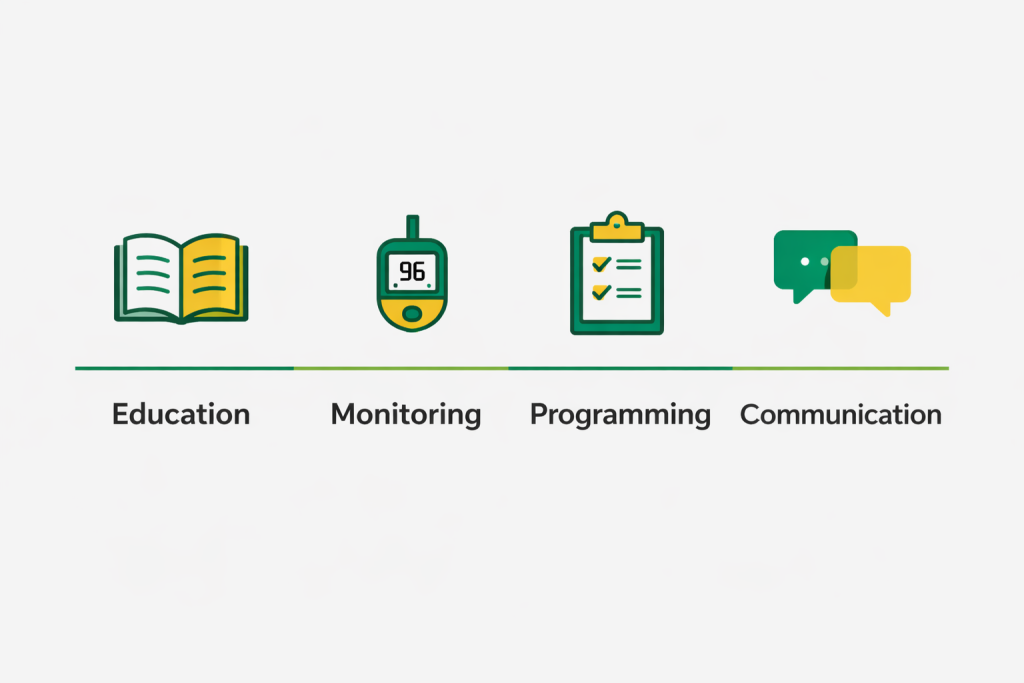
Coaching & Training Diabetic Athletes demands education, communication, and intelligent programming. When systems are strong, diabetic athletes do not just participate. They perform.
This guide reflects the EvoFitLab standard: evidence-informed, performance-led, and uncompromising in athlete care.
Train smart. Coach with intent. Build resilient athletes.
Written by Gerard Nicholas, CSCS