
Youth athletes are not simply small adults. Rapid growth, open growth plates and fluctuating hormones change how muscle, tendon and ligament tissues respond to load. This Youth Muscle Injury Guide distils the latest evidence into field-ready steps that coaches, parents and clinicians in Trinidad and beyond can apply today. publications.aap.orgblogs.bmj.com
Why the Youth Muscle Injury Guide Matters
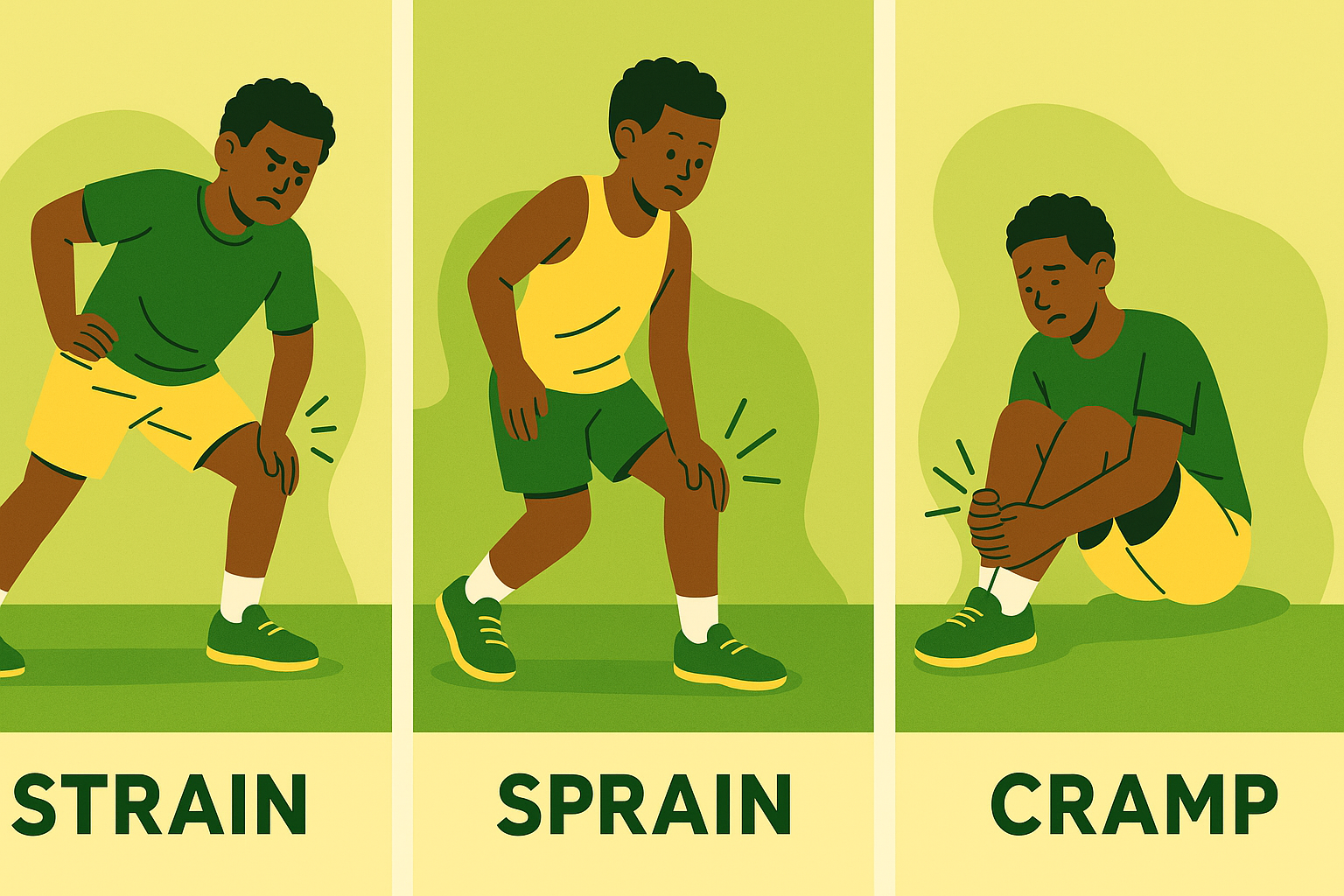
Muscle injuries—strains, sprains, cramps and imbalances—account for up to 45 % of lost training days in youth sport. Early recognition and correct loading accelerate return-to-play while preventing chronic deficits. pubmed.ncbi.nlm.nih.govpubmed.ncbi.nlm.nih.gov
Common Youth Muscle Injuries
Muscle Strain (and how to grade it)
| Grade | Damage | Hallmark Sign | Typical RTP* |
|---|---|---|---|
| I | < 5 % fibres | Tightness, minimal loss | 7-10 d |
| II | 5-50 % fibres | Palpable gap, swelling | 2-4 wk |
| III | > 50 % or rupture | Immediate dysfunction | 6-12 wk |
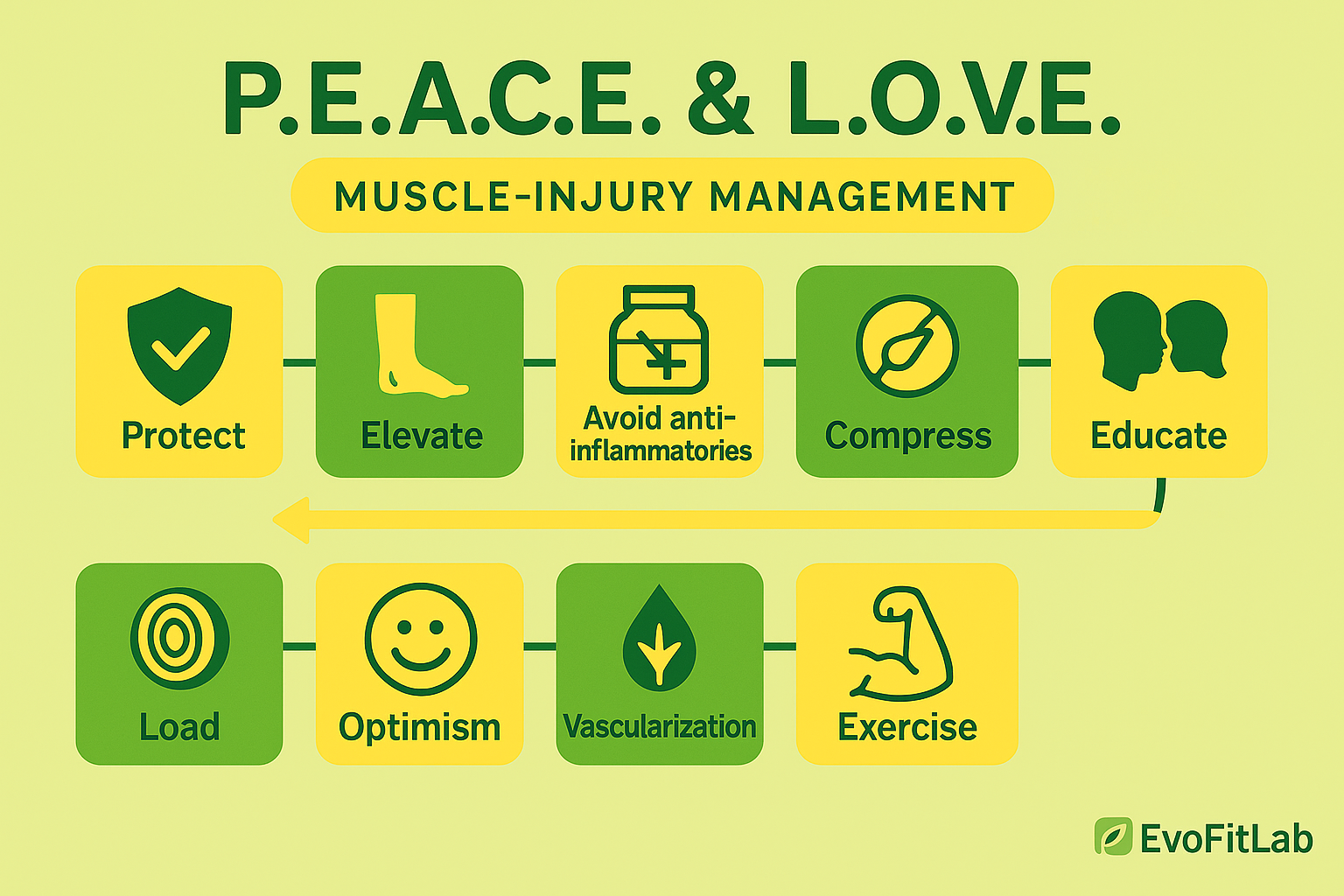
Immediate care follows PEACE & LOVE (Protect, Elevate, Avoid anti-inflammatories, Compress, Educate → Load, Optimism, Vascularisation, Exercise). physio-pedia.comblogs.bmj.com
Ligament Sprain
Ankle ATFL/CFL and knee MCL dominate youth sprains. Brace Grade II–III injuries, advance to proprioceptive drills when swelling subsides, and demand ≥ 90 % hop-test symmetry before full return. pubmed.ncbi.nlm.nih.gov
Spasm & Exercise-Associated Muscle Cramp
Neuromuscular fatigue plus fluid–electrolyte losses drive cramps. Regular conditioning and sodium-containing fluids (300–600 mg L⁻¹) reduce incidence. pmc.ncbi.nlm.nih.govtruesport.org
Atrophy & Imbalance: The Hidden Risks
Disuse after immobilisation can shrink cross-sectional area by 3-4 % per week in children. Early isometrics and blood-flow-restriction work (< 130 mmHg) limit loss while plates are still open. pubmed.ncbi.nlm.nih.gov
Imbalances such as quad dominance over hamstrings raise strain risk; Nordic curls twice weekly cut hamstring injuries by ~50 %. pubmed.ncbi.nlm.nih.govpubmed.ncbi.nlm.nih.gov

Integrated Management Framework
- Screen → Classify → Communicate. Shared electronic notes keep coaches, S&C staff and physios aligned.
- Load Monitoring. Track ACWR alongside growth velocity; a spike during an 8 cm y⁻¹ growth spurt is a red flag. journals.lww.com
- Education. Quarterly workshops for athletes and parents cover warm-ups, sleep and nutrition.
Internal link: Download printable load-tracking sheets on our EvoFitLab homepage.
Internal link: Read more injury-prevention articles on the EvoFitLab Blog.
Prevention & Return-to-Play Checklist
- Warm-up: FIFA 11+ Kids or similar neuromuscular routine 2× wk.
- Strength: Progressive resistance 2–3× wk, 8-week blocks show clear benefits in youth. publications.aap.org
- Flexibility: Daily 30 s static stretch holds for high-risk muscle groups post-session.
- Hydration: 5 ml·kg⁻¹ water 2 h pre-session, then 200-300 ml every 15 min in the heat. truesport.org
- Return-to-Play: Pain-free full ROM, limb-symmetry index ≥ 90 %, and one normal training week before competition.
Conclusion & Next Steps
Implementing the steps in this Youth Muscle Injury Guide will cut downtime and build resilient movers. Start by adding Nordic curls to next week’s programme and reviewing your PEACE & LOVE protocols with staff.
Written by Gerard Nicholas, CSCS