
Introduction
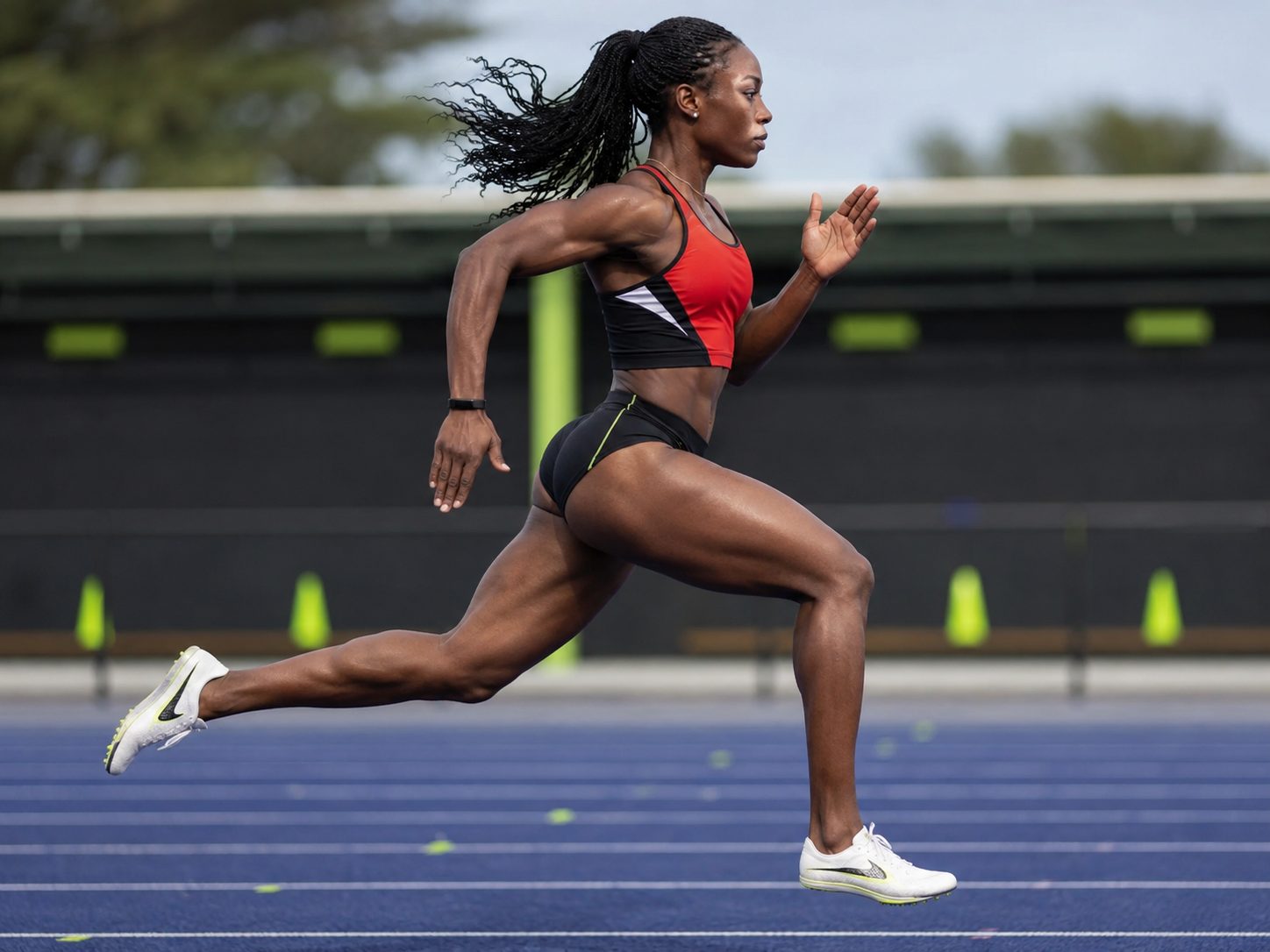
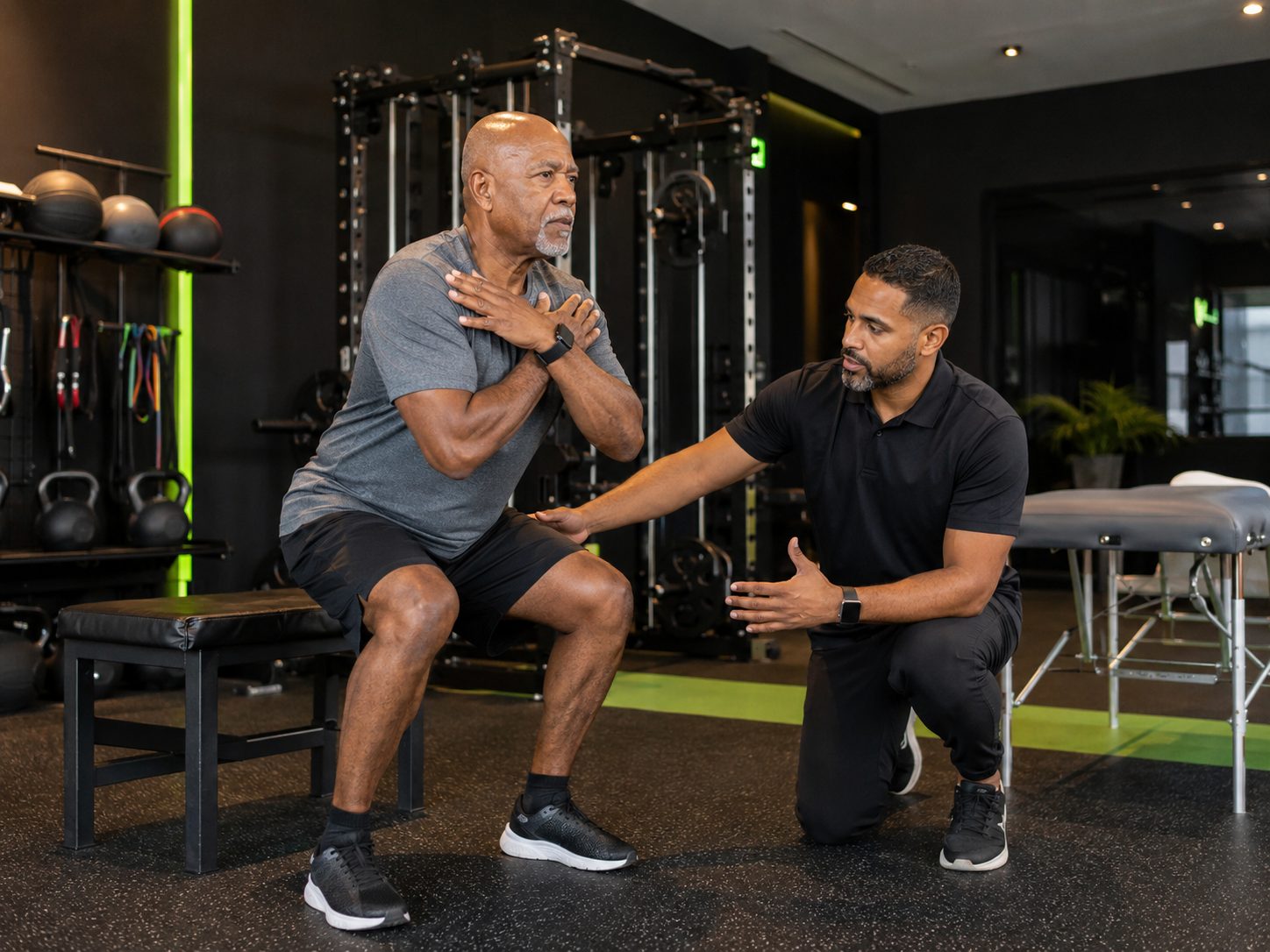
Understanding your hip and thigh muscle anatomy is essential for anyone seeking to move better, train harder, or prevent injuries. Whether you’re an athlete, gym-goer, or someone recovering from pain, knowing how these muscles function can be the difference between progress and setbacks. This guide from EvoFitLab explains the key muscles of the hip and thigh, how they work, and why they matter in training and rehabilitation.
Deep Core and Hip Stabilizers
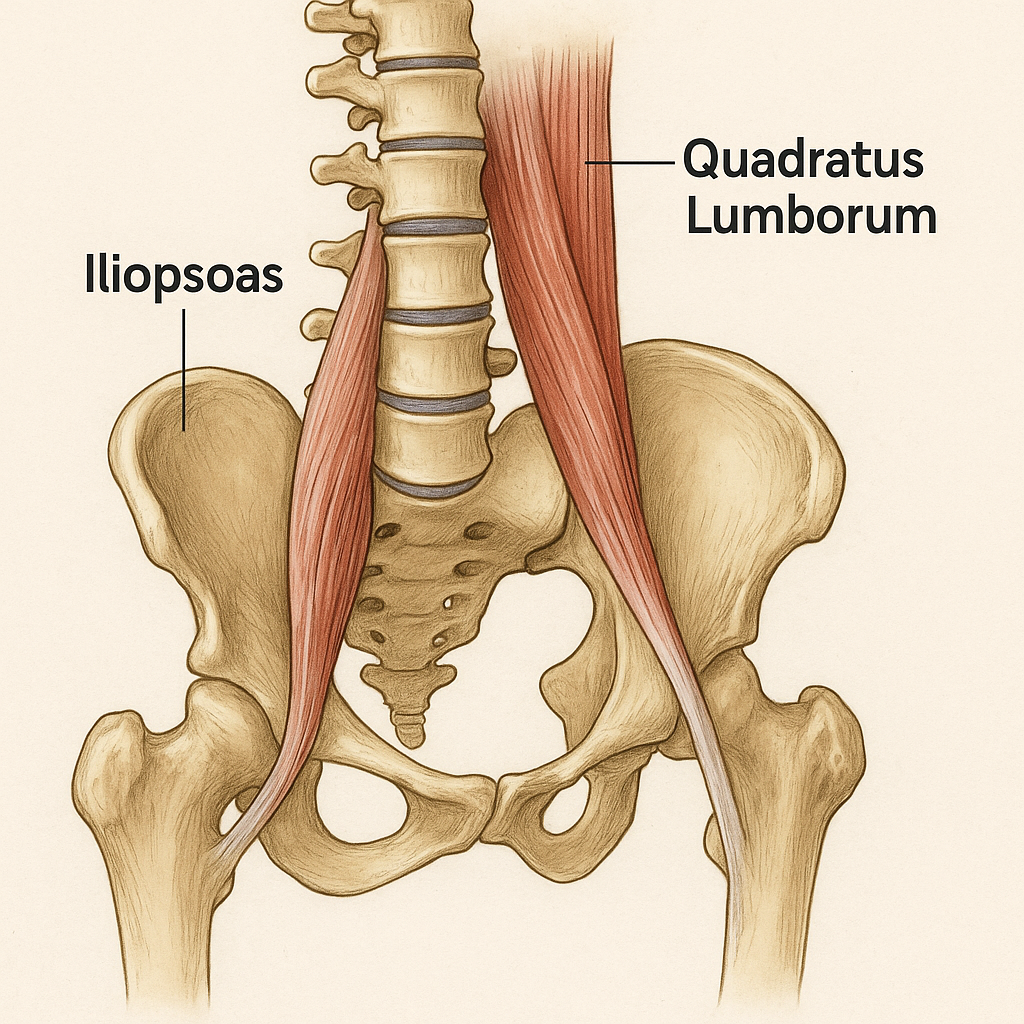
Quadratus Lumborum (QL)
- Location: Back of the abdominal wall, between the iliac crest and lower ribs
- Function: Pelvic and spinal stabilizer, supports side bending of the spine
- Fitness Relevance: Strengthen to improve core control and prevent lower back pain during deadlifts and squats
Iliopsoas Group (Psoas Major, Psoas Minor, Iliacus)
- Location: Runs from lumbar spine and iliac fossa to the femur
- Function: Hip flexion, external rotation, trunk stability
- Fitness Relevance: Vital for running, sprinting, and deep squats. Tightness may lead to chronic lower back discomfort
Lateral Hip and Pelvic Stability
Tensor Fasciae Latae (TFL)
- Location: Lateral hip, from ilium to the IT band
- Function: Assists hip abduction and internal rotation
- Fitness Relevance: Overactivity may cause IT band tightness. Strengthen in lateral movements, stretch if overly tight
Iliotibial Band (IT Band)
- Location: From TFL to the tibia, along the outer thigh
- Function: Stabilizes the knee during movement
- Fitness Relevance: Foam rolling the IT band helps reduce risk of lateral knee pain, especially in runners
Quadriceps Group and Knee Support
Rectus Femoris
- Location: Center of the front thigh
- Function: Hip flexion and knee extension
- Fitness Relevance: Essential for jumping, sprinting, and posture. Stretch regularly to avoid anterior pelvic tilt
Vastus Lateralis, Medialis, and Intermedius
- Location: Front and sides of the thigh
- Function: Knee extension, patellar tracking
- Fitness Relevance: Crucial for joint stability during squats, lunges, and leg presses
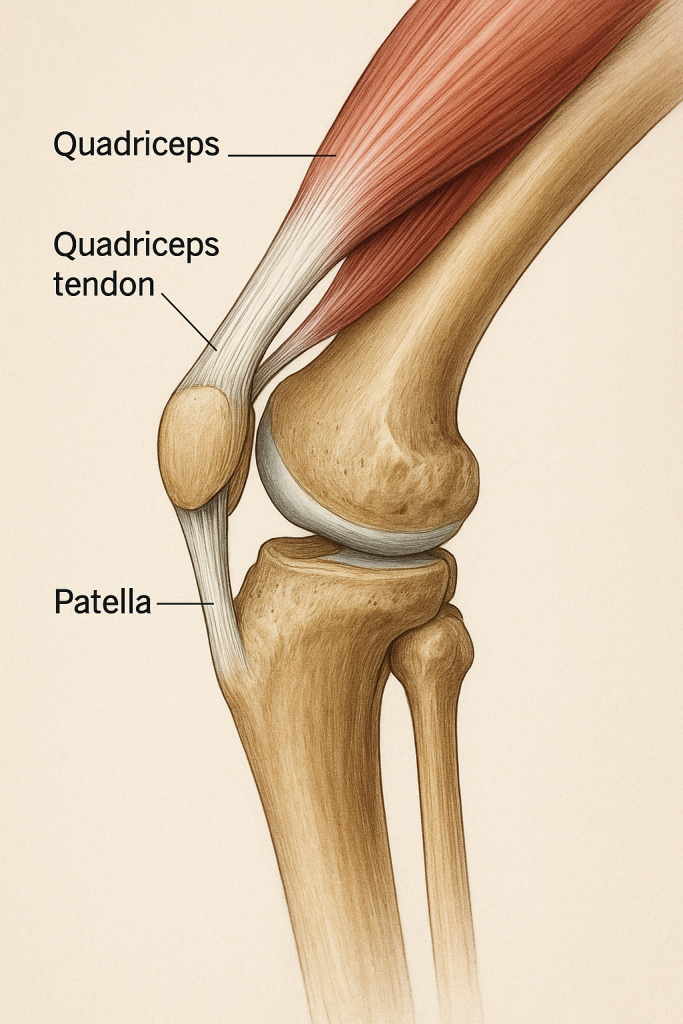
Patellar Ligament and Quadriceps Tendon
- Location: Connect patella to tibia and quads
- Function: Enable knee extension
- Fitness Relevance: Strong quads and proper knee alignment reduce strain on these structures during high-impact activities
Inner Thigh and Hip Adductors
Pectineus
- Location: From the pubis to the upper femur
- Function: Hip adduction and flexion
- Fitness Relevance: Important for balance and core stability during lower-body movements
Gracilis
- Location: Runs from the pelvis to the inner tibia
- Function: Hip adduction and knee flexion
- Fitness Relevance: Strengthen for better lateral movement and injury prevention in sports
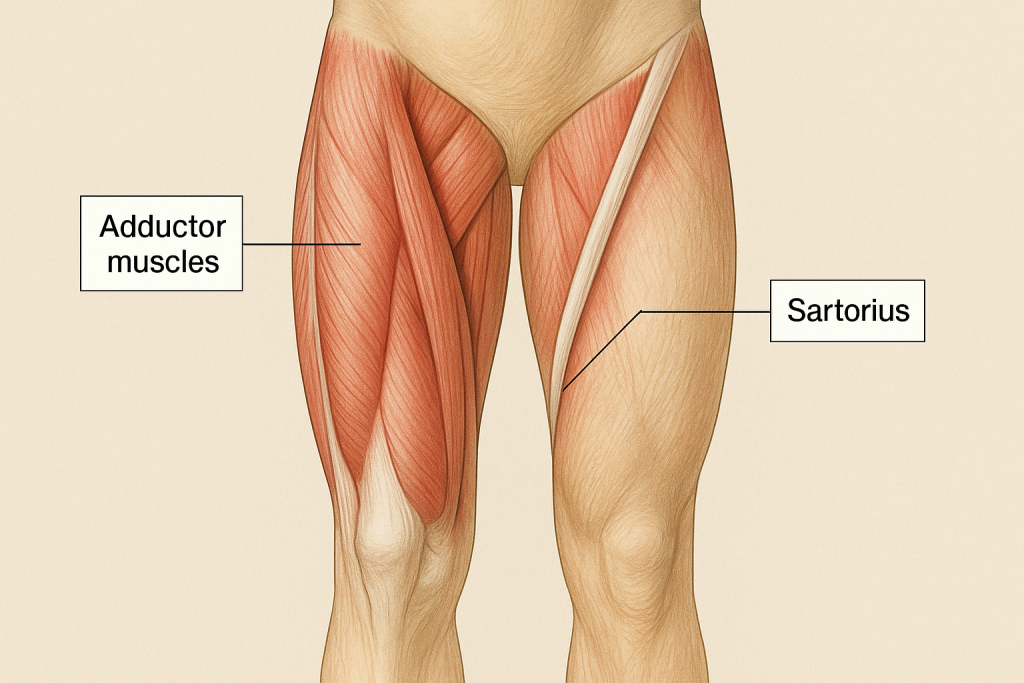
Adductor Longus & Magnus
- Location: Inner thigh, spanning from pubis/ischium to femur
- Function: Adduction and pelvic stabilization
- Fitness Relevance: Weakness can lead to groin strains. Activate during sumo squats and side lunges
Sartorius
- Location: Runs diagonally across the thigh (longest muscle in the body)
- Function: Hip flexion, abduction, external rotation, and knee flexion
- Fitness Relevance: Helps with explosive direction changes. Important in sport-specific training
Conclusion and Call to Action
Stronger legs start with smarter training—and smarter training starts with anatomical awareness. Understanding your hip and thigh muscles isn’t just about science, it’s about injury prevention, better form, and long-term results.
Ready to improve your mobility and strength from the inside out?
Book a movement assessment or personal training session with EvoFitLab and start unlocking your body’s potential today.