

Youth Athlete Development Guide for Trinidad & Tobago
Unlock a proven framework for youth athlete development that balances physical literacy, mental skills, social growth, and fun—designed specifically for coaches and fitness professionals in Trinidad & Tobago.
TL;DR
- Youth athlete development integrates Long-Term Athlete Development (LTAD), age-appropriate training, and periodization.
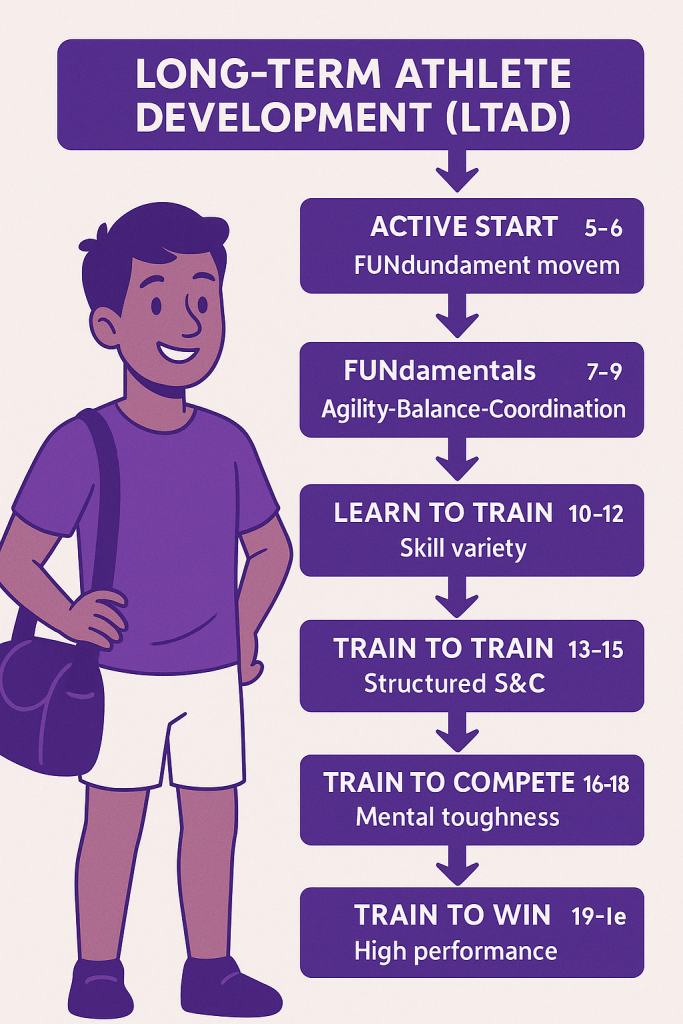
- Follow an age-group framework (6–9, 10–12, 13–15, 16–18) to build skills progressively.
- Implement periodized S&C across Off-Season, Pre-Season, In-Season, and Transition phases.
- Tailor sport-specific drills for cricket, football, basketball, rugby, netball, and track & field.
- Emphasize nutrition, mental skills, life skills, injury prevention, and clear roles for coaches, parents, and athletes.
Why Youth Athlete Development Matters
Building a strong foundation in childhood ensures lifelong engagement, reduces burnout, and prevents injury. Our youth athlete development framework aligns with the Sport for Life LTAD model to optimize growth and performance – learn more at Sport for Life LTAD.
Explore how structured programming fits into our Athletic Development Services and supports your athletes at every stage.
Age-Group Training Framework
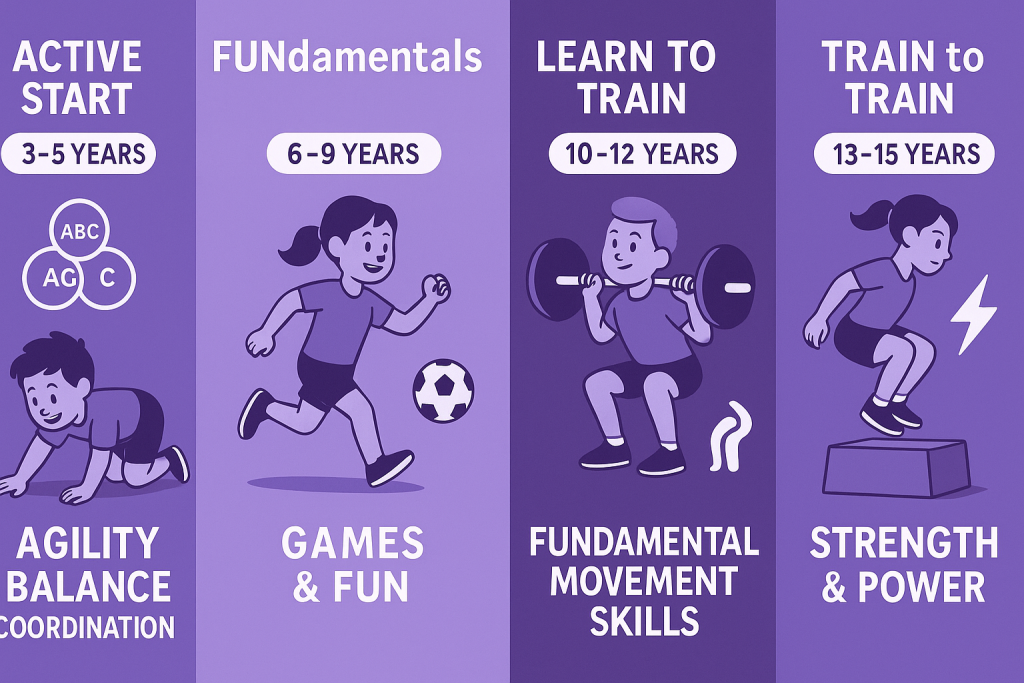
Active Start & FUNdamentals (6–9 yrs)
- Frequency: 2–3×/week, 45 min
- Focus: Agility, balance, coordination games; bodyweight movement patterns.
- Activities: Animal crawls, mini-circuits, play-based challenges.
Learn to Train (10–12 yrs)
- Frequency: 3×/week (2 skills + 1 S&C), 60 min
- Focus: Fundamental movement mechanics (squat, hinge, push, pull).
- Activities: Medicine-ball throws, ladder drills, journaling for self-reflection.
Train to Train (13–15 yrs)
- Frequency: 4×/week (2 S&C + 2 skills), 75 min
- Focus: Strength 2–3×8–12 reps @ 55–70% 1RM; power via ≤ 80 plyo landings/week; PHV monitoring.
- Activities: Resistance exercises, controlled plyometrics, growth-spurt charts.
Train to Compete (16–18 yrs)
- Frequency: 5–6×/week, 90 min
- Focus: Phase potentiation—hypertrophy → max strength → power; sport tactics; leadership.
- Activities: Advanced S&C, energy-system work, peer mentoring.
Periodized Strength & Conditioning Programmes
Break the year into Off-Season, Pre-Season, In-Season, and Transition to maintain progress and recovery.
| Phase | Duration | Goals | Metrics |
|---|---|---|---|
| Off-Season | 6–8 weeks | Restore & correct imbalances | FMS, ROM, RPE |
| Pre-Season | 8–12 weeks | Build work capacity & power | Vertical jump, YoYo IR1 |
| In-Season | Varies | Maintain fitness & skills | sRPE, GPS load |
| Transition | 2–4 weeks | Active rest & psychological reset | Wellness survey |
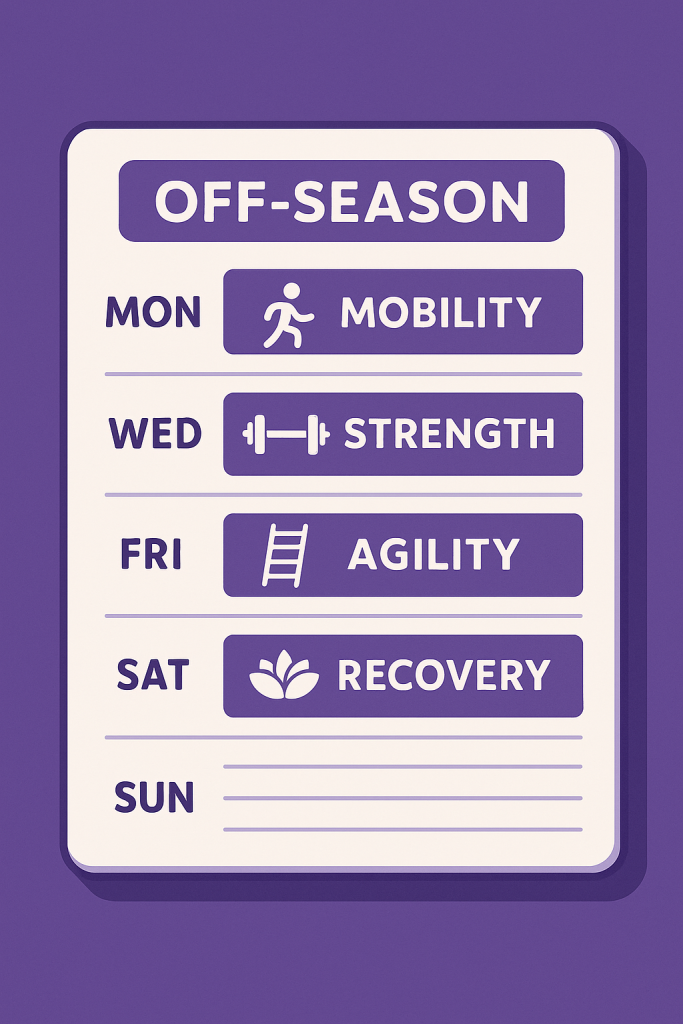
Off-Season Sample (13–15 yrs): mobility + functional strength, speed/agility, active recovery, strength emphasis, small-sided games, rest.
Sport-Specific Considerations
Tailor training drills to each sport’s demands and injury risks.
- Cricket: shoulder & lumbar care; limit U15 bowling to ≤ 4 overs/session.
- Football: Nordic hamstring programme; heat-management breaks every 15 min.
- Basketball: teach triple-flexion landings; ankle-prep drills.
- Rugby: neck isometrics & contact progressions.
- Netball: FIFA 11+ ACL prevention; controlled deceleration drills.
- Track & Field: trap-bar jump-shrugs; sprint-model from short to long.

Nutrition & Hydration Strategies
Fuel growth and performance with context-specific nutrition.
- Daily Fuel: plate method (½ fruits/veggies, ¼ protein, ¼ grains); Vitamin D & calcium sources.
- Game-Day Fuel: 3–4 h pregame (rice & fish), 60 min pregame (banana + PB), halftime (orange & electrolytes), postgame (4:1 carb:protein shake).
- Hydration: sweat-test rehydration = mass loss×1.5 L; recipe with lime juice, salt, honey.
Mental Skills & Growth Mindset
- Positive Feedback Ratio 3:1 (praise vs correction)
- SMART Goal-Setting: display process goals publicly
- Imagery Scripts: 5 min guided visualizations weekly
Social & Life Skills Development
- Team-Building: quarterly community projects
- Leadership Rotation: youth athletes rotate captaincy
- Conflict Resolution: role-play scenarios
Injury Prevention & Return to Play
- Dynamic Warm-Up: FIFA 11+ & netball-specific knee routines
- Screening: FMS twice yearly; injury-history interviews
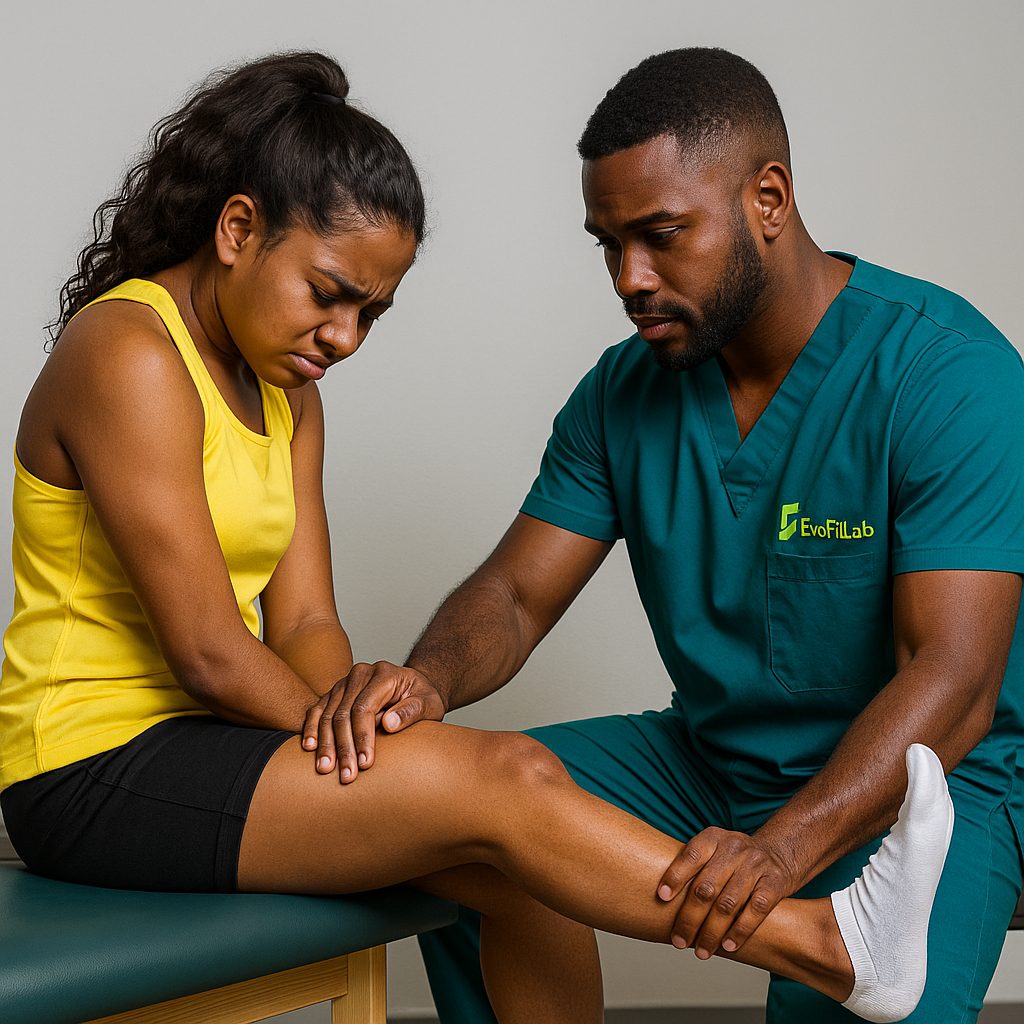
- Return to Play: multidisciplinary clearance (coach, physio, physician, parent) – see our Physiotherapy Services
Roles & Responsibilities
- Coaches: design periodization, foster safe culture
- S&C Coach: deliver programs, monitor load
- Physiotherapist: screen, rehab, educate
- Parents: support nutrition & rest, positive sideline behavior
- Athletes: commit, communicate, respect teammates
FAQ: Youth Athlete Development
What is LTAD?
Long-Term Athlete Development is a model that phases training from FUNdamentals to high-performance, ensuring age-appropriate progression (Sport for Life LTAD).
How do I monitor growth-spurts?
Use Peak Height Velocity charts; adjust loads and plyometric volume around PHV phases.
When should strength training begin?
Introduce bodyweight and light resistance drills around age 10–12; progress intensity in Train to Train (13–15 yrs).
Ready to Empower Your Young Athletes?
Partner with EvoFitLab to implement this youth athlete development framework and watch your programs thrive.
Contact EvoFitLab for Youth Coaching Solutions