

Introduction
Have you ever taken a break from the gym, only to bounce back stronger than expected? That’s the power of muscle memory training. At EvoFitLab, we believe understanding this concept can help you stay motivated and accelerate your fitness results. In this guide, we break down how muscle memory works and how to use it to your advantage.
What Is Muscle Memory?
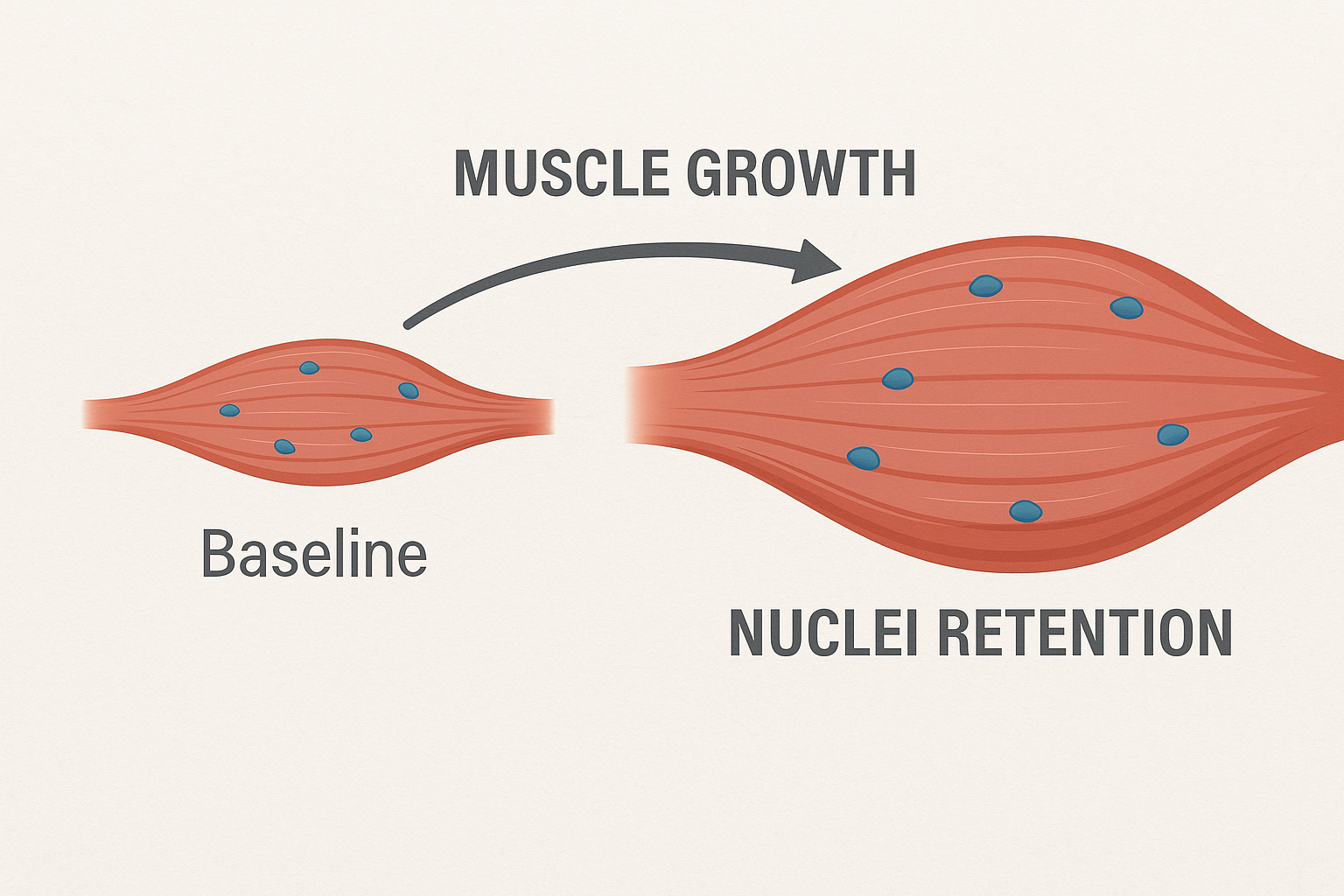
Muscle memory doesn’t mean your muscles actually “remember”, it refers to how your brain and nervous system retain movement patterns and muscle adaptations. When you train, your muscle fibers grow, adding new nuclei. These muscle nuclei remain in your cells even after long breaks, making it easier to regain strength later.

Key Components of Muscle Memory Training
Neurological Adaptations
Your brain becomes more efficient at sending signals to your muscles. These pathways remain intact long after you stop training, improving balance, coordination, and strength when you return.
Muscle Nuclei Retention
Training adds new nuclei to your muscle cells. These act as “memory banks,” staying in place even when your muscles shrink, ready to reactivate muscle growth quickly.
Repetition and Consistency
Repeating movements reinforces muscle memory. That’s why familiar exercises often feel easy—even after time off.
Why You Improve Faster After Restarting
If you’ve returned to the gym and noticed quick progress, you’re experiencing muscle memory training in action. Let’s clear up some myths:
- Myth: Muscle memory is only about mass
Reality: It’s both neural and muscular - Myth: Only athletes benefit
Reality: Anyone with past training will see faster results - Myth: Muscle memory fades quickly
Reality: It can last for years or even decades
How to Maximize Muscle Memory Training
Focus on Form
Correct technique builds stronger neural patterns and prevents injury. Avoid rushing your return.
Stay Consistent
Even 2–3 weekly sessions reinforce pathways and help maintain momentum.
Gradual Progression
Don’t overload too quickly, your nervous system may be ready, but your tissues need time to catch up.
Nutrition and Recovery
Fuel your training with protein, carbs, and rest to support regrowth and performance.
Tip: EvoFitLab’s personalized training programs help you restart safely with a muscle memory–driven approach. Learn more here
The Science Behind Muscle Memory
Scientific studies show returning lifters regain muscle faster than first-timers. Here’s why:
- Muscle Nuclei Retention: These structures support faster muscle protein synthesis
- Neural Efficiency: Previously learned movement patterns remain embedded in the nervous system
One study even suggests that muscle memory benefits can last decades, supporting late-life fitness improvements.
Conclusion
Muscle memory training is your secret weapon for long-term success. Whether you’ve been away for months or years, your body still remembers. With the right strategy, you’ll regain strength and confidence faster than you think.
At EvoFitLab, we help clients reactivate their potential every day.
Book a consultation now and let us help you bounce back stronger than ever.
👉 Start your comeback with EvoFitLab