

Comprehensive Fitness Periodization Guide: Optimize Training and Prevent Injury
Fitness periodization is the systematic planning of training variables to maximize performance at the right time while minimizing injury risk and overtraining. By cycling volume, intensity, and focus across macrocycles, mesocycles, and microcycles, fitness professionals design programs that ensure clients peak for key events and steadily adapt. This comprehensive guide shows you how to apply fitness periodization in real-world settings.
TL;DR
- Fitness periodization breaks training into structured cycles: macrocycle (≈1 year), mesocycle (1–4 months), and microcycle (1–4 weeks).
- Types of fitness periodization include Linear, Non-Linear (Undulating), Block, Wave, and Conjugate, each with unique volume–intensity structures.
- Step-by-step application: assess clients, set SMART goals, plan macro-/meso-/microcycles, monitor progress, adjust as needed, and include strategic recovery.
- Key benefits: optimized performance timing, injury prevention, continuous adaptation, and sustained client motivation.
- Sample structure: 12-week mesocycle for hypertrophy → strength → peak phases with built-in deloads and recovery.
Fitness Periodization: Why It Matters
Fitness periodization ensures clients peak when it counts—whether for a marathon, a competition, or a physique goal—by systematically manipulating training variables. Instead of random programming, periodization provides:
- Optimized Performance: Structured phases build foundational strength, transition to sport-specific skills, and culminate in high-intensity peak periods.
- Injury Prevention: Planned rest, deload weeks, and active recovery reduce overuse injuries.
- Continuous Adaptation: Varying volume and intensity prevents plateaus and promotes steady progress.
- Client Motivation: Dynamic training plans keep sessions fresh, engaging, and goal-oriented.
Explore how structured programming fits into our broader services through

Fitness Periodization: Types of Periodization
1. Linear Periodization (LP)
- Overview: Traditional model where volume decreases and intensity increases over time.
- Structure:
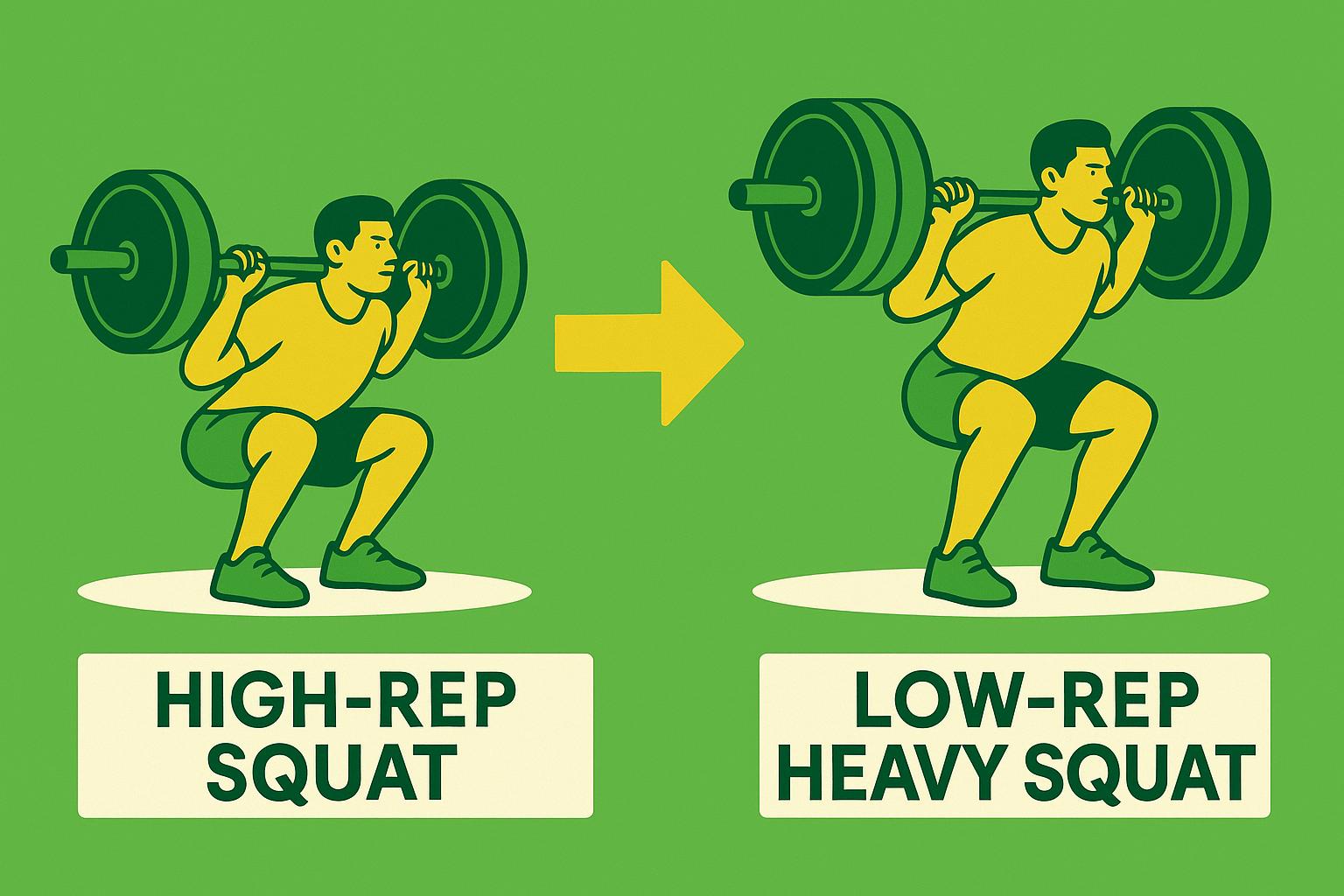
- Preparatory Phase: High volume (3×12–15 reps), low intensity to build base.
- First Transition: Moderate volume (3×8–10 reps), increasing intensity for strength gains.
- Competition Phase: Low volume (3×3–5 reps), high intensity to peak performance.
- Second Transition (Active Rest): Low volume & intensity; focus on recovery and deload.
2. Non-Linear (Undulating) Periodization
- Overview: Frequent changes (weekly or daily) in volume and intensity to stimulate adaptation.
- Sample Weekly Structure:
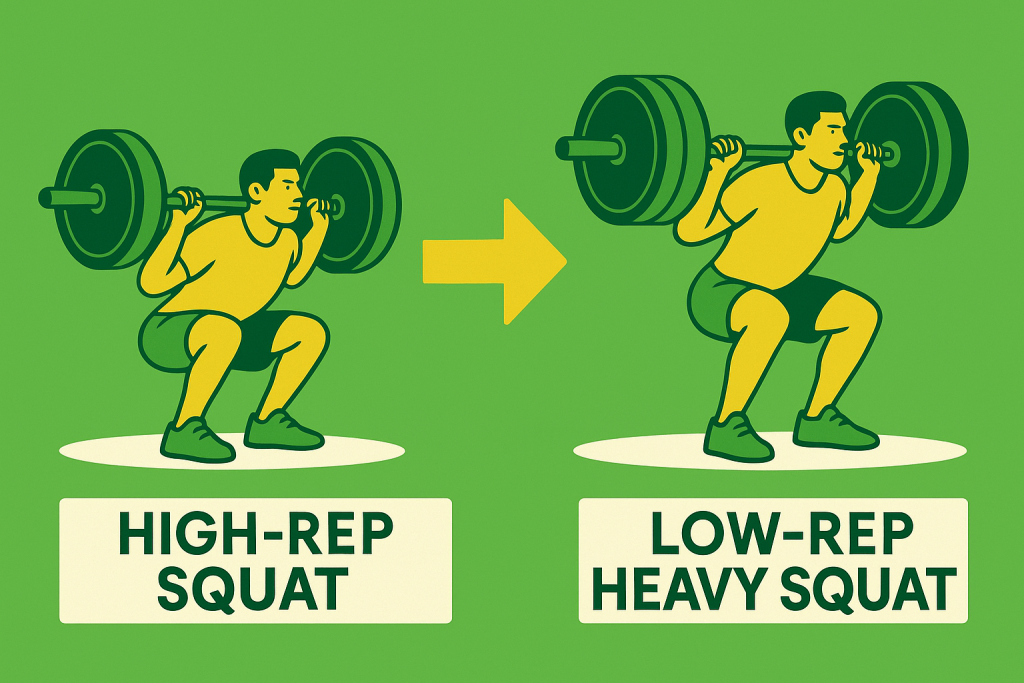
- Monday (High Volume/Low Intensity): 3×12–15 reps of squat, bench, deadlift.
- Wednesday (Moderate Volume/Moderate Intensity): 3×8–10 reps focusing on technique.
- Friday (Low Volume/High Intensity): 3×4–6 reps emphasizing maximal strength.
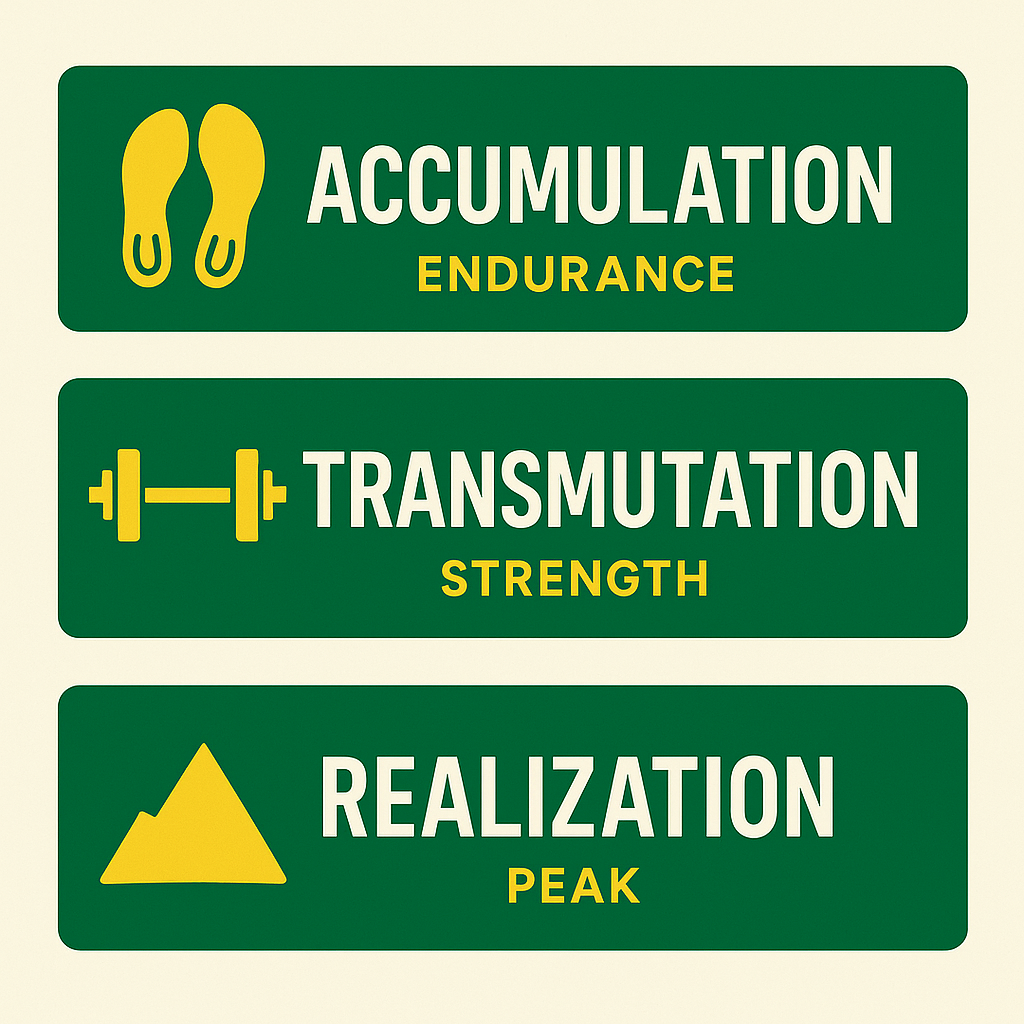
3. Block Periodization
- Overview: Divides training into specific blocks targeting particular attributes.
- Structure:
- Accumulation Block: High volume, low intensity for endurance and work capacity.
- Transmutation Block: Moderate volume/intensity, focusing on sport-specific skills and strength.
- Realization Block: Low volume, high intensity for peak performance.
4. Wave Periodization
- Overview: A variation of undulating periodization where intensity and volume rise and fall in waves within each microcycle.
- Structure:
- Start moderate (e.g., 5×8 reps), increase over sessions (e.g., 4×6), then drop back (e.g., 6×10) before ramping up again.
5. Conjugate Periodization
- Overview: Used in powerlifting/strength sports, combining multiple methods in the same microcycle.
- Methods:
- Max Effort: Lift maximal loads to build absolute strength.
- Dynamic Effort: Submaximal loads lifted explosively to develop power.
- Repetition Method: Moderate loads for higher reps (8–12) to build muscle mass.
Fitness Periodization: Phases and Their Focus
Macrocycle
- Duration: Approximately 1 year (often aligned with competition schedule).
- Focus: Long-term progression, integrating multiple mesocycles leading to a main goal (race, event, competition).
Mesocycle
- Duration: 1–4 months.
- Focus: Medium-term objectives such as building hypertrophy, strength, or endurance. Each mesocycle targets a specific adaptation:
- Hypertrophy Mesocycle: 4–6 weeks of 8–12 reps, 3–5 sets to increase muscle size.
- Strength Mesocycle: 4–6 weeks of 3–6 reps, 3–5 sets to improve maximal force.
- Power Mesocycle: 3–4 weeks of 1–3 reps at 30–60% 1RM with explosive intent.
- Peaking Mesocycle: 2–4 weeks of very low volume (1–3 reps) at high intensity (~90–95% 1RM) to peak.
Microcycle
- Duration: 1–4 weeks.
- Focus: Short-term training variations, often with fluctuations in daily volume and intensity to promote adaptation and recovery. Example microcycle structure:
- Week 1: Moderate volume (4×10 squats, 4×8 bench, 4×10 deadlift).
- Week 2: High intensity (4×3 squats @85% 1RM, 4×4 bench @80% 1RM, 4×3 deadlift @85% 1RM).
- Week 3 (Deload): Low volume (2×8 squats @60% 1RM, 2×6 bench @60% 1RM, 2×8 deadlift @60% 1RM).
- Week 4: Power focus (5×2 squats @50% 1RM explosive, 5×3 bench @50% 1RM, sled sprints).
Fitness Periodization: Step-by-Step Application
1. Assessment and Goal Setting
- Assess Current Fitness: Evaluate strength, endurance, movement quality, injury history, and recovery capacity.
- Client Goal Setting: Use SMART goals (Specific, Measurable, Achievable, Relevant, Time-bound). For example, “Increase 1RM squat by 10 kg in 12 weeks” or “Complete a half-marathon in under 1:45.”
2. Program Design
Long-Term Planning (Macrocycle)
- Define End Goal: Identify the primary event or objective (competition date, photoshoot, fitness test).
- Outline Mesocycles: Break the macrocycle into blocks focusing on hypertrophy, strength, power, and peaking.
Medium-Term Planning (Mesocycle)
- Select Periodization Model: Choose Linear, Undulating, Block, Wave, or Conjugate based on client experience and goals.
- Detail Weekly Volume & Intensity: Plan sets, reps, percentages, and exercise selection. For example, a 12-week strength mesocycle might start at 65% 1RM (5×5) and progress to 85% 1RM (3×3).
Short-Term Planning (Microcycle)
- Daily Variations: Adjust daily workload to balance stress and recovery. Include strength, power, accessory, and recovery sessions.
- Deload Weeks: Schedule every 3–6 weeks depending on client’s recovery. Deload reduces volume by ~40–50% and intensity by ~20–30%.
3. Monitoring and Adjustment
- Regular Assessments: Retest strength (1RM, 3RM), endurance (time trials), or power (vertical jump) every mesocycle.
- Client Feedback: Use RPE (Rate of Perceived Exertion) and wellness questionnaires to assess fatigue, sleep, and stress.
- Program Tweaks: If progress stalls or fatigue accumulates, adjust volume, intensity, or frequency. For example, extend a deload week or reduce accessory work.
4. Recovery and Adaptation
- Active Rest Phases: Incorporate light cardio, mobility work, and flexibility on off-days to promote blood flow.
- Deload Strategies: Use active recovery modalities such as foam rolling, gentle yoga, or low-intensity cycling.
- Nutrition and Sleep: Emphasize adequate protein intake, hydration, and 7–9 hours of sleep to support adaptation. Explore our <a href=”https://evofitlab.com/introduction-to-nutrition-at-evofitlab/” target=”_blank” rel=”noopener”>Nutrition Services</a> for personalized plans.
Fitness Periodization: Sample 12-Week Mesocycle
- Weeks 1–4: Hypertrophy Block
- Split: Upper/Lower 4-day (e.g., Mon: Upper, Tue: Lower, Thu: Upper, Fri: Lower).
- Rep Range: 8–12 reps, 3–5 sets.
- Focus: Build muscle mass and work capacity.
- Accessory Work: Core stability, mobility drills from <a href=”https://evofitlab.com/core-stability-at-evofitlab/” target=”_blank” rel=”noopener”>Core Stability at EvoFitLab</a>.
- Weeks 5–8: Strength Block
- Split: 4-day Upper/Lower or 3-day Full Body.
- Rep Range: 3–6 reps, 4–5 sets.
- Focus: Increase maximal strength with compound lifts (squat, deadlift, bench).
- Dynamic Effort Day: 50% 1RM for 6×2 explosive lifts.
- Weeks 9–10: Power Block
- Split: 3-day Full Body power days.
- Rep Range: 1–3 reps, 4–6 sets at 30–60% 1RM, focusing on velocity.
- Plyometrics: Box jumps, medicine-ball throws, sled sprints to enhance rate of force production.
- Weeks 11–12: Peaking/Deload
- Week 11 (Peaking): Low volume (2–3 sets of 1–3 reps at 90–95% 1RM), minimal accessory work.
- Week 12 (Deload): Reduce volume by ~50% and intensity by ~20%; focus on mobility, light conditioning, and mental preparation.
Fitness Periodization: Benefits
- Optimized Performance: Clients peak at the right time, whether for races, competitions, or photoshoots.
- Injury Prevention: Built-in deloads and active rest minimize overuse injuries.
- Continuous Adaptation: Strategic variation keeps training stimulus novel, preventing plateaus.
- Client Motivation: Diverse workouts—hypertrophy, strength, power—maintain engagement and excitement.
- Professional Credibility: Demonstrates a science-based approach, enhancing trust.
For more on injury prevention and recovery, visit our Physiotherapy Services

Fitness Periodization: FAQ
What is fitness periodization?
Fitness periodization is the planned manipulation of training variables—volume, intensity, and focus—to optimize performance and recovery over time.
How long should each mesocycle be?
Mesocycles typically last 4–6 weeks for a specific adaptation (hypertrophy, strength, power) but can range from 1–4 months depending on goals.
Which periodization model is best?
It depends on the client’s experience and objectives:
- Linear: Beginners or clients seeking straightforward progression.
- Undulating: Intermediate/advanced lifters needing variety to avoid plateaus.
- Block: Sport-specific athletes with defined competition dates.
- Wave/Conjugate: Powerlifters or those requiring frequent variation.
Can beginners use fitness periodization?
Yes. Start with a simple Linear Periodization model: build a strength base, then transition to moderate-high intensity and implement deloads every 4–6 weeks.
How do I know when to deload?
Monitor Rate of Perceived Exertion (RPE), fatigue, sleep quality, and performance stagnation. If RPE climbs despite consistent loads, schedule a deload.
Ready to Elevate Your Programming?
At EvoFitLab, our certified coaches design custom periodized plans that align with your goals—whether you’re an athlete aiming for peak performance or a fitness enthusiast chasing aesthetic results. Reach out today to discuss a tailored program.